Three spiritual substances that restore connection in an age of separation
Sep 21, 2026
I have three children ages 17 to 24, often referred to as Generation Z. These are the “zoomers” who were born after 9-11 and either lost their high school experience to COVID or navigated new models for prom, homecoming, graduation, and homework in a remote-first age. I am dazzled at their emotional intelligence yet dumbfounded at their seeming lack of resilience. They seem at once very wise and very fragile. They are top-heavy with their clear picture of the world and yet don’t understand a plumbing shut-off valve. According to them, they all have social anxiety, attention challenges, and feel at once overly connected yet isolated.
They wonder if life is always this stressful or if they have something biochemical that needs fixing. They feel the need to make good choices and fear making mistakes. They are attached to their devices while wanting clear and enforceable limits with screen time.
They feel like something is wrong.
This worries me, until I look a little closer and see some genius coping mechanisms they use to self-regulate, stay on track, and find happiness. Their methods are not the same but tend to follow a few consistent paths:
Frenzy, distraction, and catastrophizing.
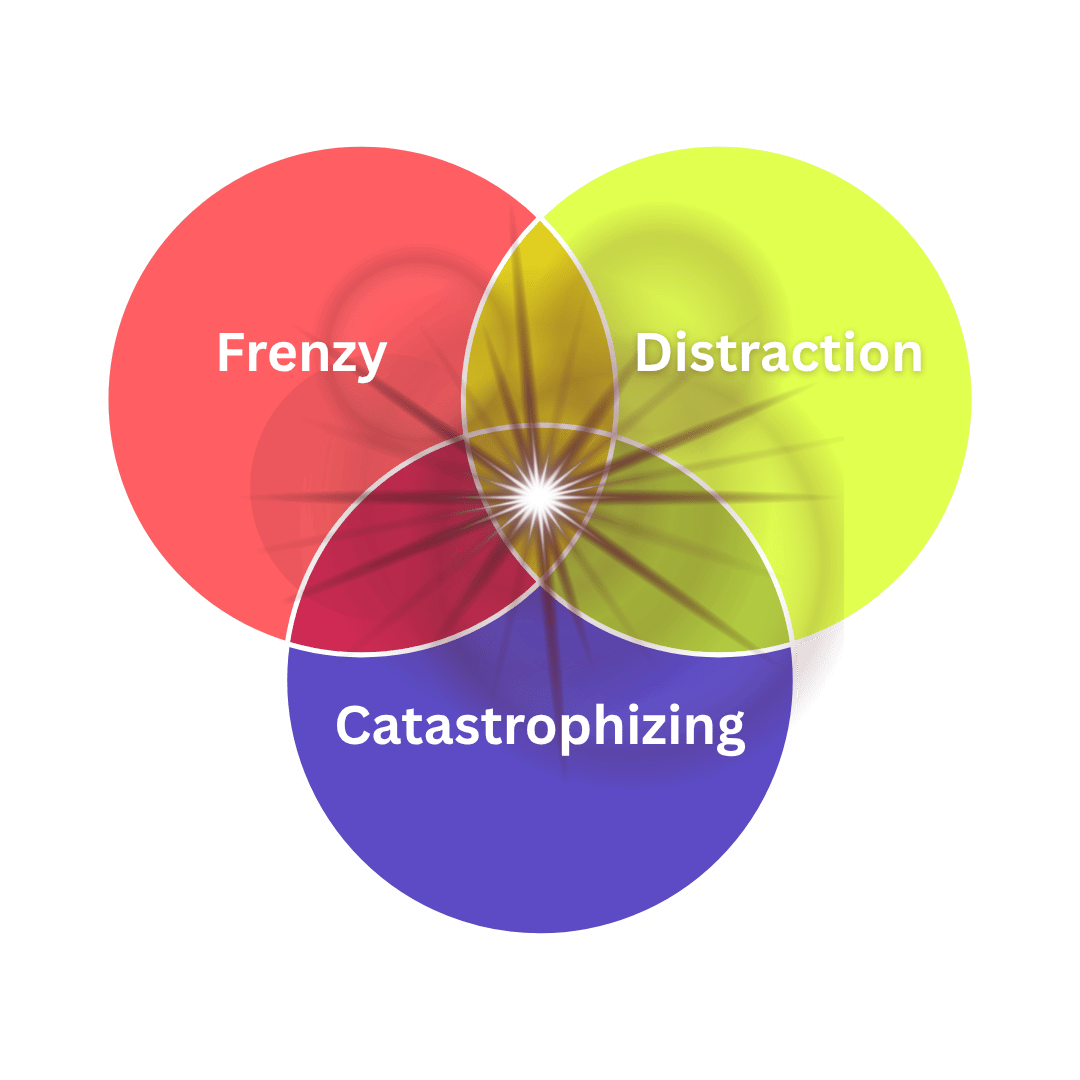
At first blush, these might seem like pour strategies that could easily spiral out of control. They might, it is true—but what I often see is that these strategies find a toe-hold of connection that can quickly spread. They are like burning down a meadow to encourage re-growth. It is an effective if not dramatic approach to a successful end. And success, I suggest, is feeling connected. This can be a connection to one’s self, to one’s community, to nature, to God, or to the universe. It is a deeply satisfying sensation and one that can hold all the hard stuff at the same time:
You can appreciate loneliness without feeling it.
You can delight in bliss without getting lost in it.
You can empathize with depression without getting stuck.
You can warm yourself to ambitious drive without having to win.
There is a serenity to feeling connected that allows for all the feelings, but without the extremes.
Returning to frenzy, distraction, and catastrophizing, I can see the more subtle connective spiritual substances that are present in each cocktail.
Frenzy is an extreme state that I see when one of my children gets so delighted their eyes widen, their voice pitches, and they hold their arms out in a reflexive protective gesture. I see it when their favorite team scores or when they realize their friend enjoyed the same moment in the same show. It is an intense shot of connection, like a double espresso after exercising. It makes you want to scream. I believe within frenzy is a very stable, very slow key ingredient: gratitude. Gratitude is the hot water component of espresso. While all our attention goes to the bitterness and caffeine, we forget that most of it is hot water. Boring, stable, same-ole hot water. That is gratitude. In the next chapter, we’ll dive into the nature of gratitude and ways to practice it as a component of collaborative storytelling, but first let’s look at this idea that gratitude is a “substance”.
Gratitude is an emotion, right?
Yes technically, but I see it as something with physical properties because it can change the way I see, hear, taste, behave, and move. It can change my world view in an instant, and most powerful of all—it can give me access to something bigger, a higher power or an authentic sense of inclusion. What else do we want in life?
This is why I use the word substance.
Emotions are confusing, especially how you can change them. But substances you can keep in your kitchen or bathroom cabinet, like a flight of spices or a medical kit. When you need a little dash of gratitude, you pull out the jar, shake out a few granules, and pop them in your mouth like grains of salt. And everything changes.
The same is the case with savoring.
Returning to distraction, the young people reach for ways to stop feeling anxious, overwhelmed, and depressed. They watch a few minutes of a show, they open an energy drink, they lift weights, they scroll and scroll and scroll, all with the hopes of making themselves feel differently. And it works, for a while. Until it doesn’t. And then the cycle repeats itself.
Savoring is distraction un-rushed.
Savoring is what happens when you stick with something long enough to immerse yourself in it. When you linger long enough on the quality of light coming through the window, you begin to savor. When you delve into the nutty taste in your latte, you begin to savor. When you notice the unique tone in a traffic helicopter hovering by, you move from distracted to savoring.
Gratitude is a substance that gives you access to something bigger. Savoring holds you there. Savoring is the warm embrace of presence, feeding you life by the spoonful.
And then longing is what is underneath catastrophizing.
I notice that when any of my children is struggling with something, it tends to escalate quickly. When they hear some bad news or the car won’t start, or what they ordered doesn’t line up with their expectations, things can quickly spiral downward. Suddenly everything sucks and there is nothing anyone can do to change it. Their life is doomed and they can easily identify who and what is dooming it.
Longing is the substance of clarification and evaluation.
It is how we close. We end something by noticing the lingering heartbreak. We identify what is important by noticing what still hurts. What isn’t here. What we don’t have. This is different than desire, and it is not regret. Longing is beautiful and deeply human. In an age where artificial intelligence can help us do most tasks, it will never help us with our longing. That is ours.
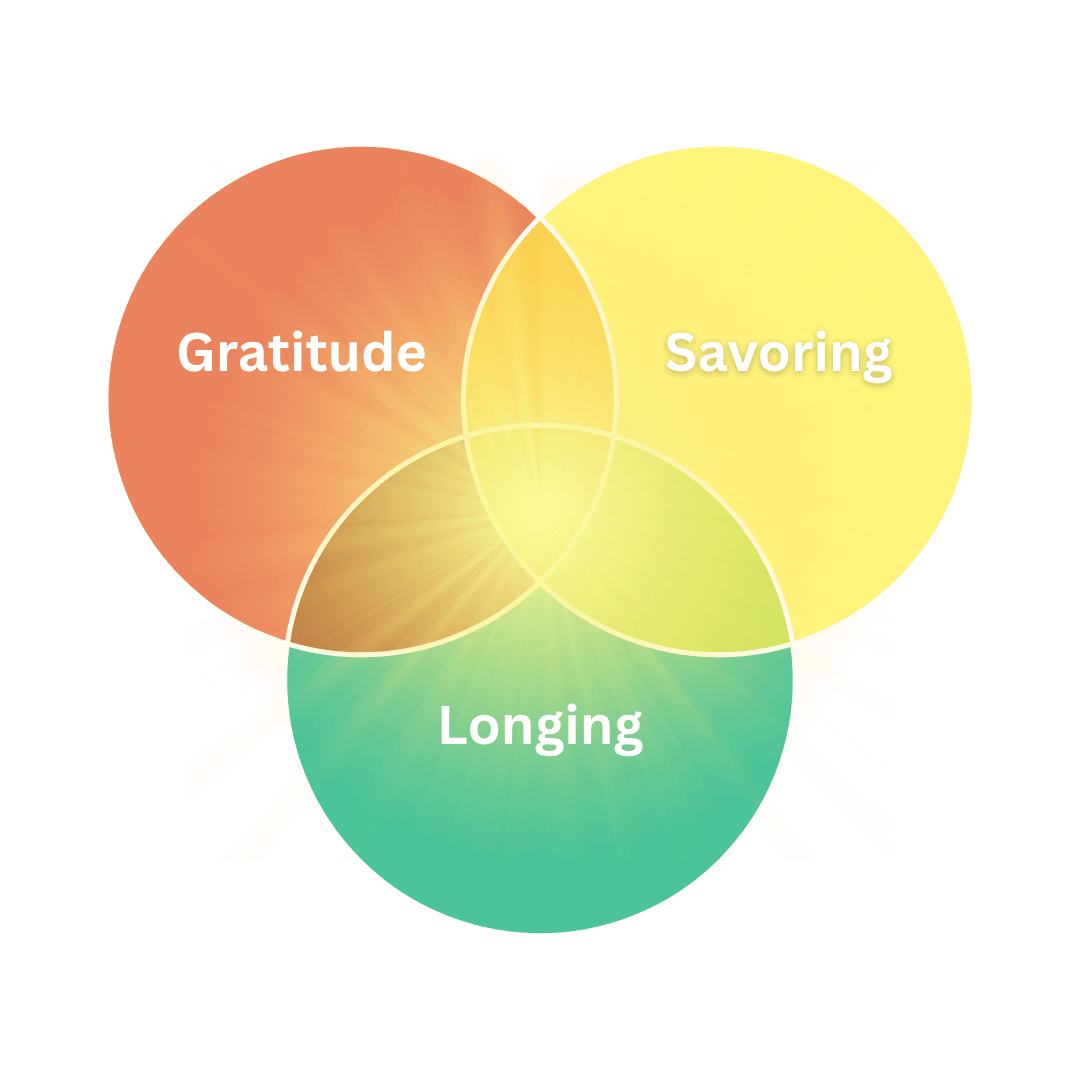
Three spiritual substances that will be explored in the following chapters: gratitude, savoring, and longing. These are the substances connected to the direction “down” where we root into the earth and feel our bodies, reach out for connection, and entangle ourselves with others.
I am told we are experiencing an epidemic of loneliness. I believe it, but I can say that loneliness is impossible when I feel gratitude.
I am told that stress is at an all time high. I believe it, but I can say that stress disappears when I begin to savor.
And I am told that we are all overwhelmed by the calamities of climate change, global instability and political polarization, but I can say that longing immediately shows me what I value, and what small thing I can do next.
Join a community of Storytellers and receive lots of free tools and courses. I'd love to meet you!
