How to Approach a Story
Oct 11, 2026
A few years ago, I gave a keynote speech to the Colorado City and County Managers Association. This may strike you as strange until you think about what this community does. While they do handle roads and development and conflict resolutions and budgets and staff, they are ultimately the custodians of a community’s ever-evolving story.
Local leaders read and tinker with the golden thread of their town, and hopefully keep the story healthy and authentic.
I went for a walk before the keynote. It was snowing. Though I wasn’t using the term “substance” back then, I did open myself to the walk and the town of Glenwood Springs with a warm sense of adventure. As the snow got heavier, I continued forward with my head down, focusing step by step through the slushy snow. Then I happened to look up and see a brown sign across the street with the words “Doc Holliday’s Grave” and an arrow pointing up a side street.
I only had a few minutes but this seemed too interesting to pass up.
The signs led me to the edge of a big hill or small mountain and a sign that read “Trail to Doc Holliday’s Grave.” With the snow coming down in droves, I didn’t think there would be a trail to follow but sure enough, someone had very recently been there. They had packed down the trail wearing snowshoes.
I followed the packed down trail (wearing dress shoes) up a steep trail to a simple white marble gravestone that read “John Henry Holliday.”
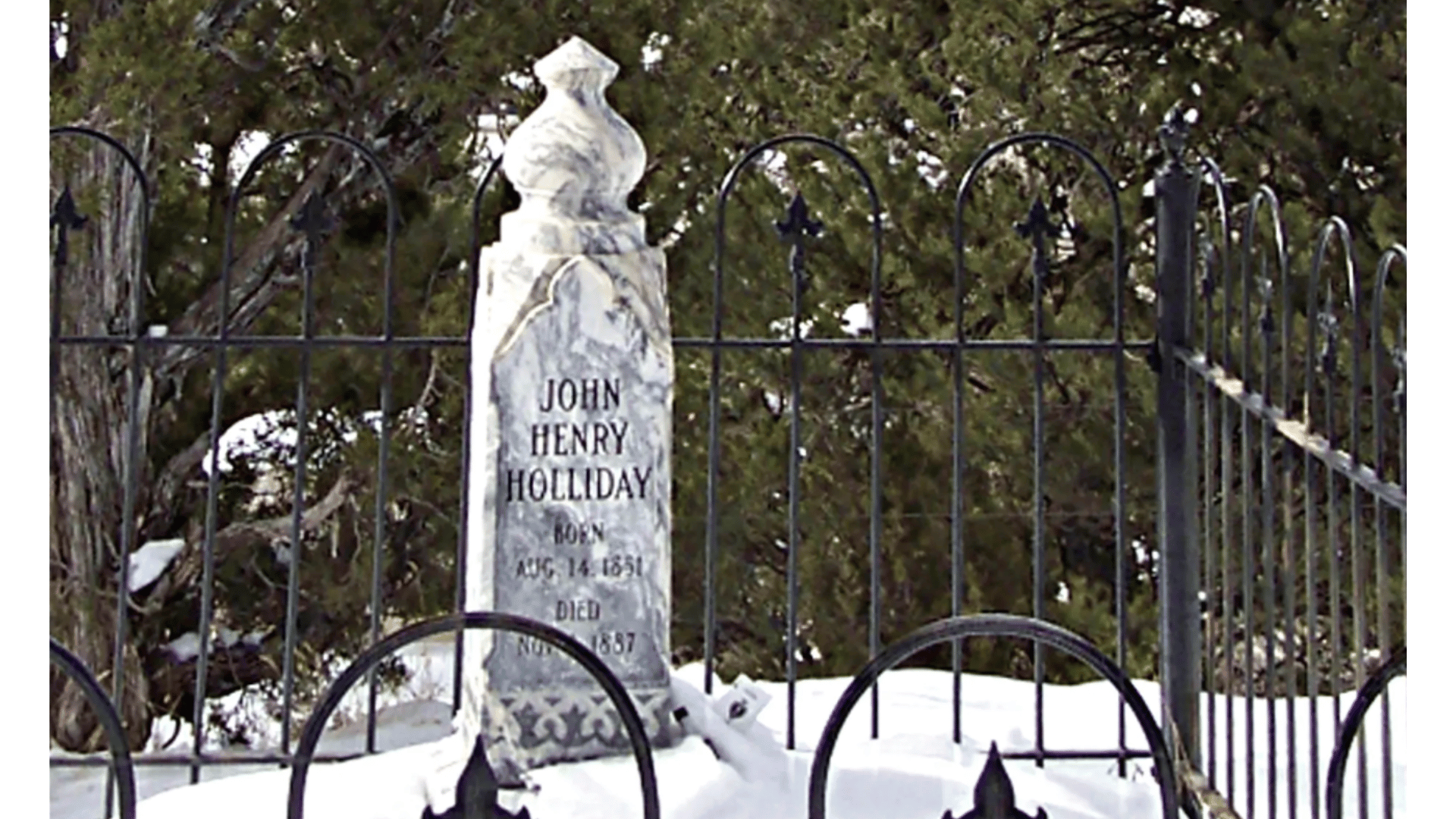
There was a plaque next to the grave that said the famous gambler and gunfighter had come to Glenwood Springs to heal himself from consumption by soaking in the famous hot springs. He came to avoid death and get better. Unfortunately, it was too late, and he died a few days after he arrived.
I fell in love with Glenwood Springs in that moment, because the town valued this part of its story so much that someone had lovingly made sure that I was able to see the grave during a bad snowstorm.
That is a shimmering detail in the golden thread of Glenwood Springs.
Twenty minutes later I approached the keynote in the same way I had approached the grave. With a sense of adventure and fun, I opened my hour-long address to three hundred city managers with “I just went on a walk in the snow and my feet took me somewhere remarkable.”
I immediately had the full attention of the room, and as I unfolded the details of the experience and the discovery of the grave and my newfound love of Glenwood Springs, the entire keynote transformed in real time. And we all approached it together.
We are now in the storytelling action substances that follow the direction of “forward.” This is where we move from witness to participant. We move from comfortable to risky. We move from inside to outside and we do it all with a sense of adventure and fun.
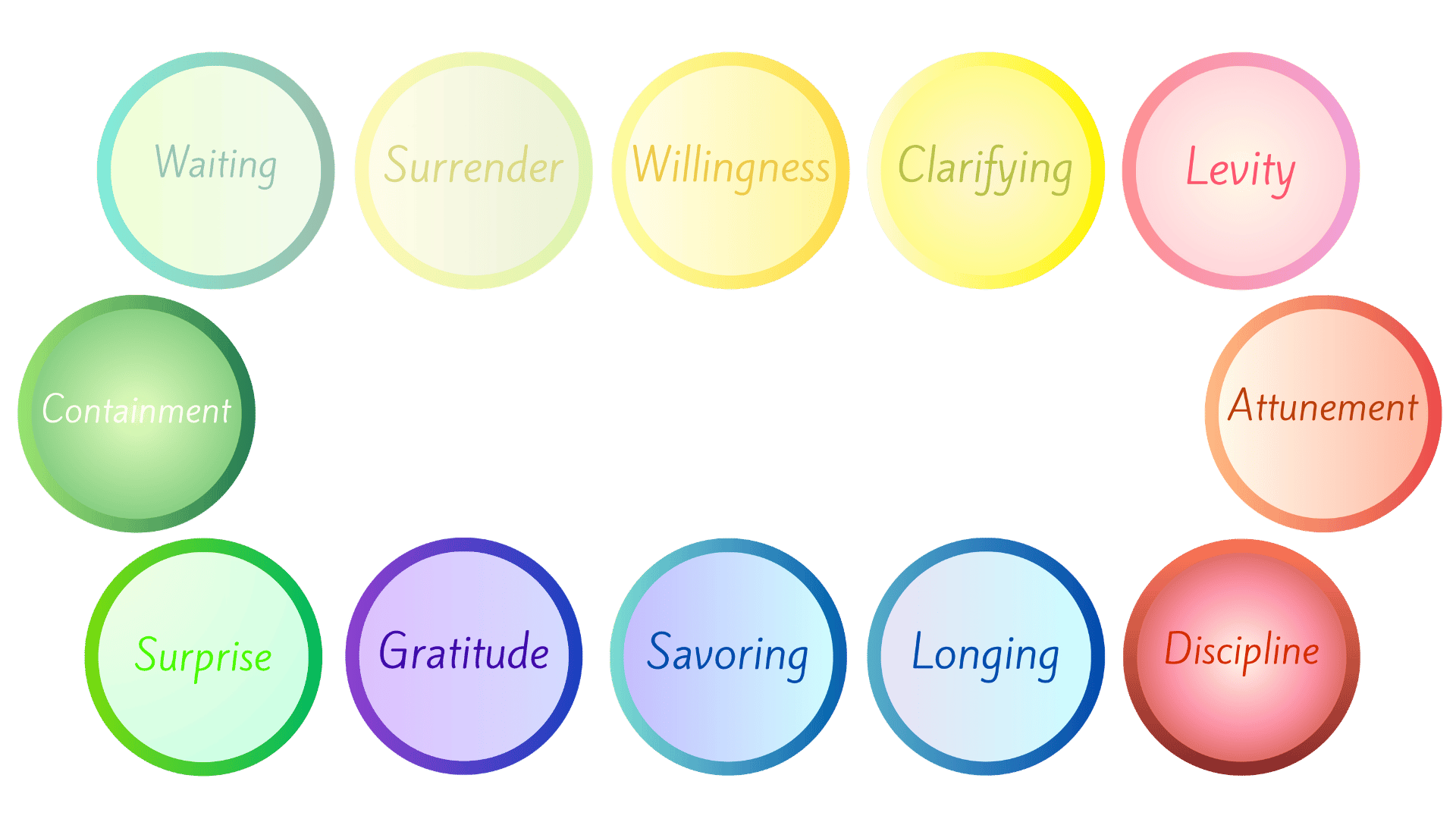
The three substances of down (gratitude, savoring, and longing) connect us to ourselves and our listeners through the sense experience of our bodies. We are conscious of how we feel and experience it like a tree in the forest. We become one with the whole.
The three substances of up (surrender, willingness, and clarification) help us access and then wend through all the new and emergent ideas available to us. No writers block can last when we are up, and instead we learn tools to help choose the best story for that particular situation and moment.
In forward, we step into life.
We interact with people. We open our mouths and say “Once upon a time…” or “There was once…” or even “That reminds me of a story…” and launch ourselves into the real work of spontaneous transformative storytelling. This is where the rubber meets the road, and we approach the road with a sense of levity, an intention to attune to the room and the moment, and then have the discipline to do what we said we would do. This is a practice of integrity and becoming trustworthy through storytelling, and those are the most valuable qualities a storyteller can possess.
Stories are active and always move forward. They are to be approached in their telling, not reflected on as if they are something that already happened. Even when you are telling a story that is a reflection from the past, the actual telling of that story is an adventure that is unfolding in real time. This is the reality of storytelling: it is alive. Dead stories don’t exist, so I don’t think we should pretend we are digging up coffins. All storytelling is discovery and discovery is alive and adventurous and fun.
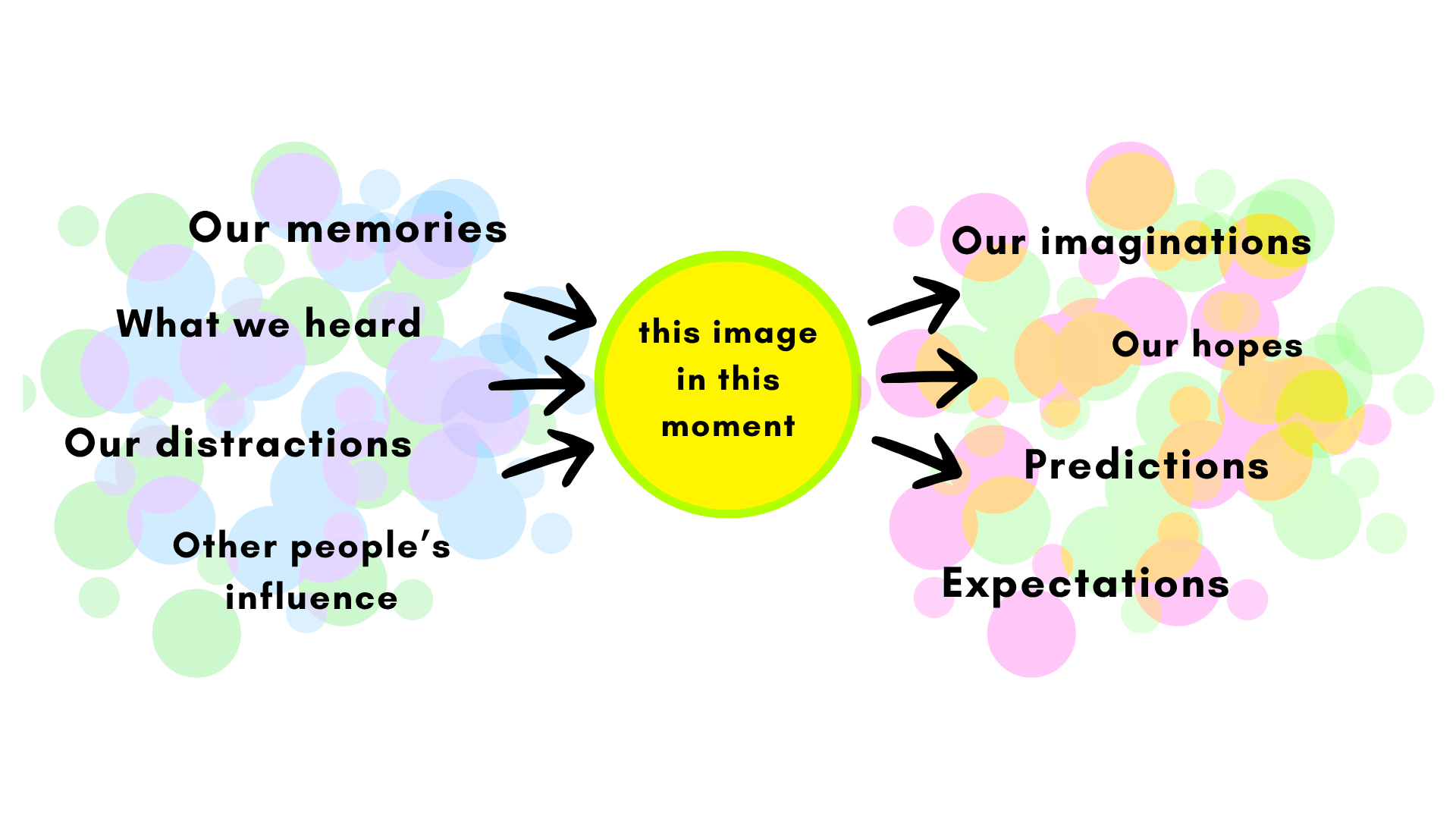
Think about approaching something.
The arrival never really happens when we are present. Approaching includes an element of wariness—or being mindful and focused—always seeing the destination in the distance and carefully getting closer. But if we are honest, there is also some levity or lightness, some attunement, and some discipline. These are the substances of forward, and I promise that their application will be the most fun you have ever had.
When we tell stories with this kind of fun, even serious stories, we are fully present responding to subtle cues that lead us to the golden thread. When we allow ourselve to discover the grave of Doc Holliday, we are delighted, and we marvel that such a perfect discovery happened. We experience magic.
Exercise: Approach through Pretending
Pick a person in your life that is going through some kind of hardship, difficulty, transition and could use some support.
Get your phone and put in your headphones/headset or put the phone up to your ear. Go outside and start walking—pretending that you are having a phone conversation.
Once you get a good stride going, look at your environment and start telling a story off the top of your head. Just notice where your attention goes and start your story there. “Once upon a time a squirrel jumped from one tree to the next” or “There was once a old rusty blue truck at the side of the road.” Don’t think about it, just start.
Be curious about the story and keep approaching it. Wonder what will happen next, as if you are the listener and not the teller. Keep pretending to be on the phone and just let your attention pull the story this way and that. Don’t worry about making sense.
If you do start to control the story or bend it in a certain direction, immediately shift it in a different direction. The goal is not to make sense or tell a good story. The goal is to just let your attention wander and integrate what you notice into your story.
It is not necessary to have a graceful ending for this exercise. In fact, you can end it when you end up back home—even if the story doesn’t seem like it is over. Just wipe your hands of that story and go back inside, put your phone away, wrap up your earbuds, and congratulate yourself on a fine walk and talk. Done

It is possible that you will think about your spontaneous story again later in the day. You might recall some of the images and the narrative and the twists and turns—especially the forces of resistance and challenge. You might see some connection to your friend and their struggle, or you might make a personal connection. It doesn’t matter. Enjoy whatever insight you had knowing that it is a bonus. The point was to do the exercise. That is it.
Join a community of Storytellers and receive lots of free tools and courses. I'd love to meet you!
