Restorative Dialogue and the Essential We
May 01, 2026
Martin Buber (1923) sees the human experience as dialogic, moving from “I” to “thou” which then ultimately lands in the “Essential We”.
More and more I find that everything in life is dialogic, an interplay between the storyteller and the listener, through any exchange between seeming individuals. Even walking through the woods can be a dialogic experience: smelling the earth brings a memory of childhood with results in a smile which broadcasts to the birds a certain attractive vibe, which results in more birdsong, etc.
Dialogic Practice is a form of communication found in models of leadership, diplomacy, pedagogy, prison work, and mental health practices. Dialogue often nods to storytelling because meaningful communication happens through telling stories or observing narrative. Most define dialogue with its ancient Greek roots, dia (through) and logos (speech), or “talking through” a topic.
William Isaacs (1999) of MIT considers dialogue an opportunity to “think together in relationship” and he connects dialogue with action, or community development. In his book Dialogue and the Art of Thinking Together, Isaacs also lists three requirements for dialogue:
- An ability to produce coherent actions, where those involved can learn new behaviors
and not be stuck in our contradictions.
- A willingness to create fluid structures of interaction, where we can create a
predictive intuition or the ability to see possibilities clearly.
- A commitment to provide a wholesome space, or “architecture of the invisible” where
the participants can feel safe and build trust.
Having studied a wide variety of dialogic practices, the therapeutic “Open Dialogue” approach has influenced Restorative Dialogue the most. In the early 1980s, a Finnish team of clinical psychologists led by Jaako Seikkula developed the seven principles of Open Dialogue. Five of the seven are organizational, whereas the final two, tolerance of uncertainty and polyphony, are the basis of the therapeutic benefit of the practice. Tolerance of uncertainty has been at the forefront of the RS process, making room for emergent new ideas that benefit the teller, listener and ultimately the community.
Part of Open Dialogue’s approach includes a practice of responding to the client’s “utterances.” The sounds, body language, and silences are considered as important as the words spoken. These “utterances” (Olson et al., 2014, p. 13) are explicitly addressed in the session, as are other elements like focusing on the present moment, eliciting multiple viewpoints, both from within the client and with the community. “Utterances” are another way of describing nonverbal communication, and nonverbal communication is a key ingredient of Restorative Storytelling.
The goal of Restorative Storytelling is connect.
We use storytelling to build community, to tend it and strengthen it, and make it more inclusive and welcoming. Restorative Storytelling is not designed to distract, entertain, impress or even to teach, though the tools can deliver these results. The point is the connection, and this is why the emergent storytelling associated with AI tools will never serve the same purpose. We can be artificially entertained, taught, and even moved—but the Essential We happens by way of connecting with a “whole”.
Restorative Dialogue is one of the tools of Restorative Storytelling which connect the Story Listening and Open Response tools with the goal of finding the Essential We.
This means that we, as storytellers, enter any environment by first “containing” the event. We are clear about the who, what, when, and why of the exchange that is about to happen.
- Who is involved in this? Which people specifically?
- When and Where is this happening?
- Why are we having this event? What is the point? Is there a specific objective?
- Are we all on the same page about the rules of the dialogue? Are we using the tools of Restorative Storytelling?
Then we begin by listening from the four directions:
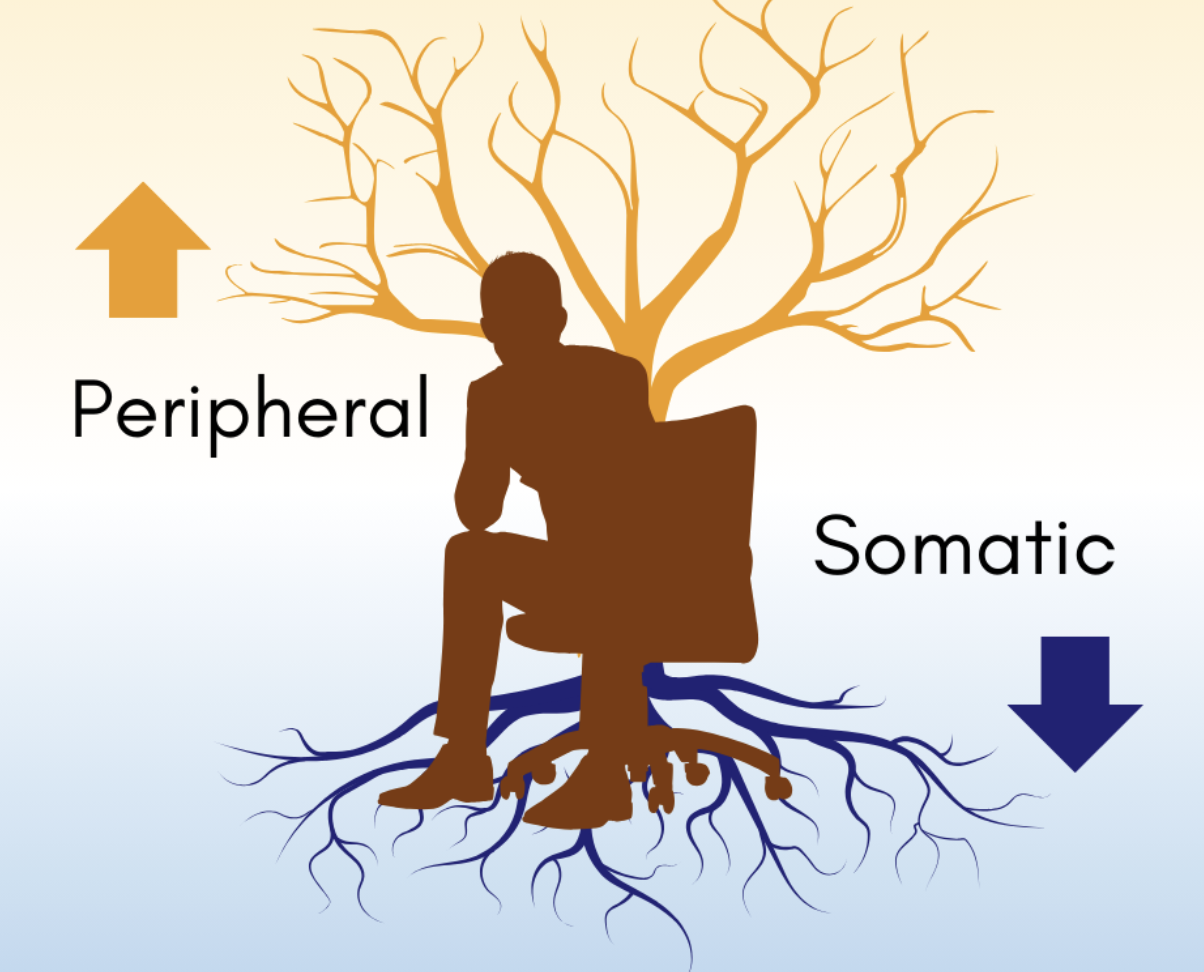
- We attend the periphery by following our own attention. Where are we looking? What are we thinking about? What is distracting us? We see these as clues. This is Up.
- We feel our bodies and notice our energy response to the environment. What is uncomfortable? Where is there ease? What happened to our bellies when someone said something? Are we more or less tired? This is Down.
- We focus on the content. We wonder at the point. We prepare a response. We try to solve, fix, give advice. We are active and wish to be useful. This is Forward.
- We wait. We are unhurried and patient and wait for a signal when something important happens. This cues us to respond. The signal tells us when it is time to speak up and highlight what happened. This is Back.
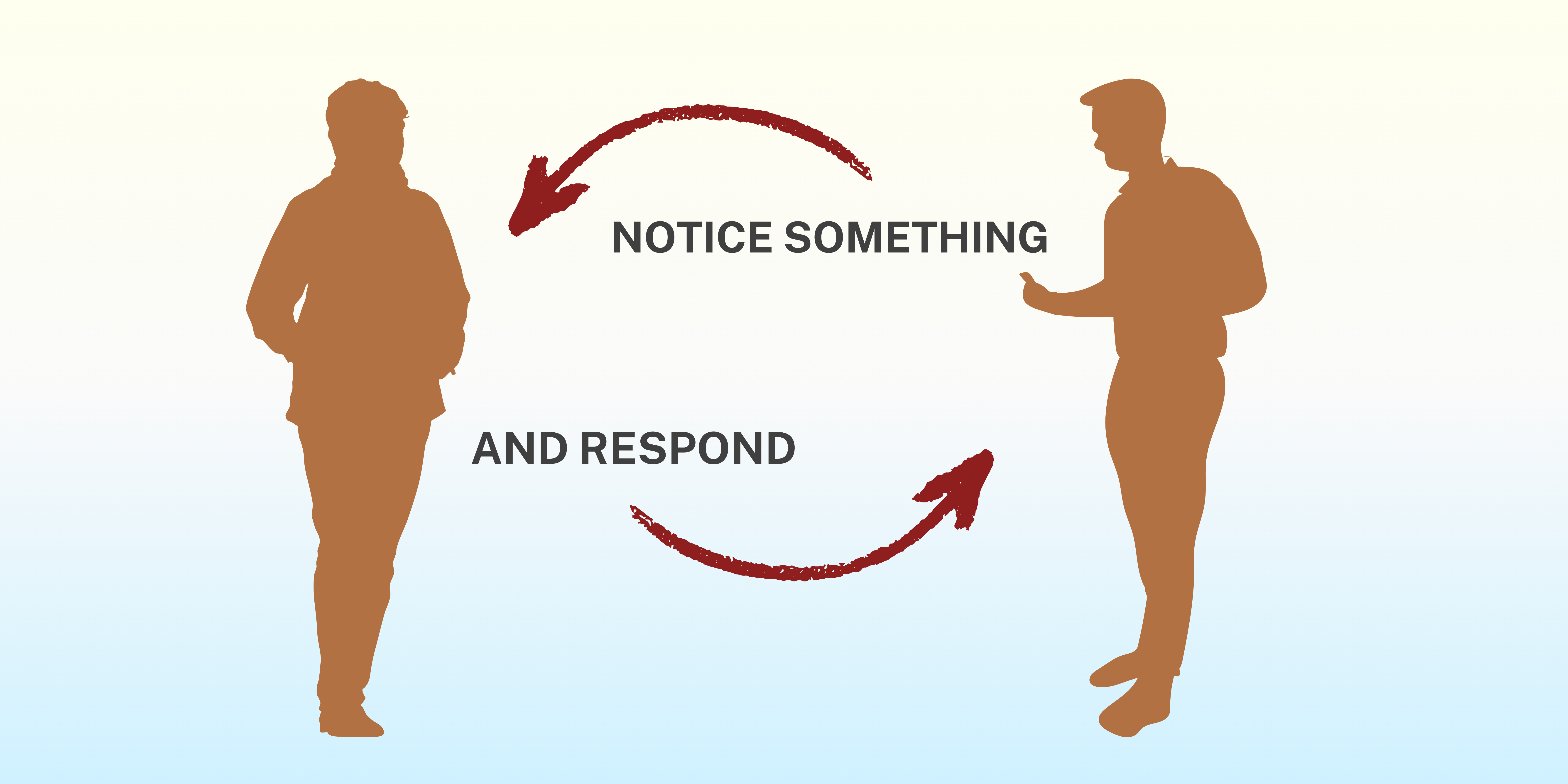
The response follows the same directions. When something catches our attention, or we receive a body signal (flushed, hair on arms raises up, a feeling of ‘woah’), then we can respond with words or body language or behavior.
- We comment on where our attention went. “I stopped listening because my attention went to that tree there. Isn’t it beautiful?” This is Up.
- We announce how we feel. “When you were talking about your dog, I started to feel dizzy.” This is Down.
- We focus on what they are saying and keep the exchange in the lane of the content. We seek and ask for clarity. “Are you saying you disagree with what he said? Can you say more about that?” This is Forward.
- We respond immediately to any signal. “Sorry to interrupt but the thing you said about your boss seems important. Maybe we stay on that subject a little longer.” This is Back.
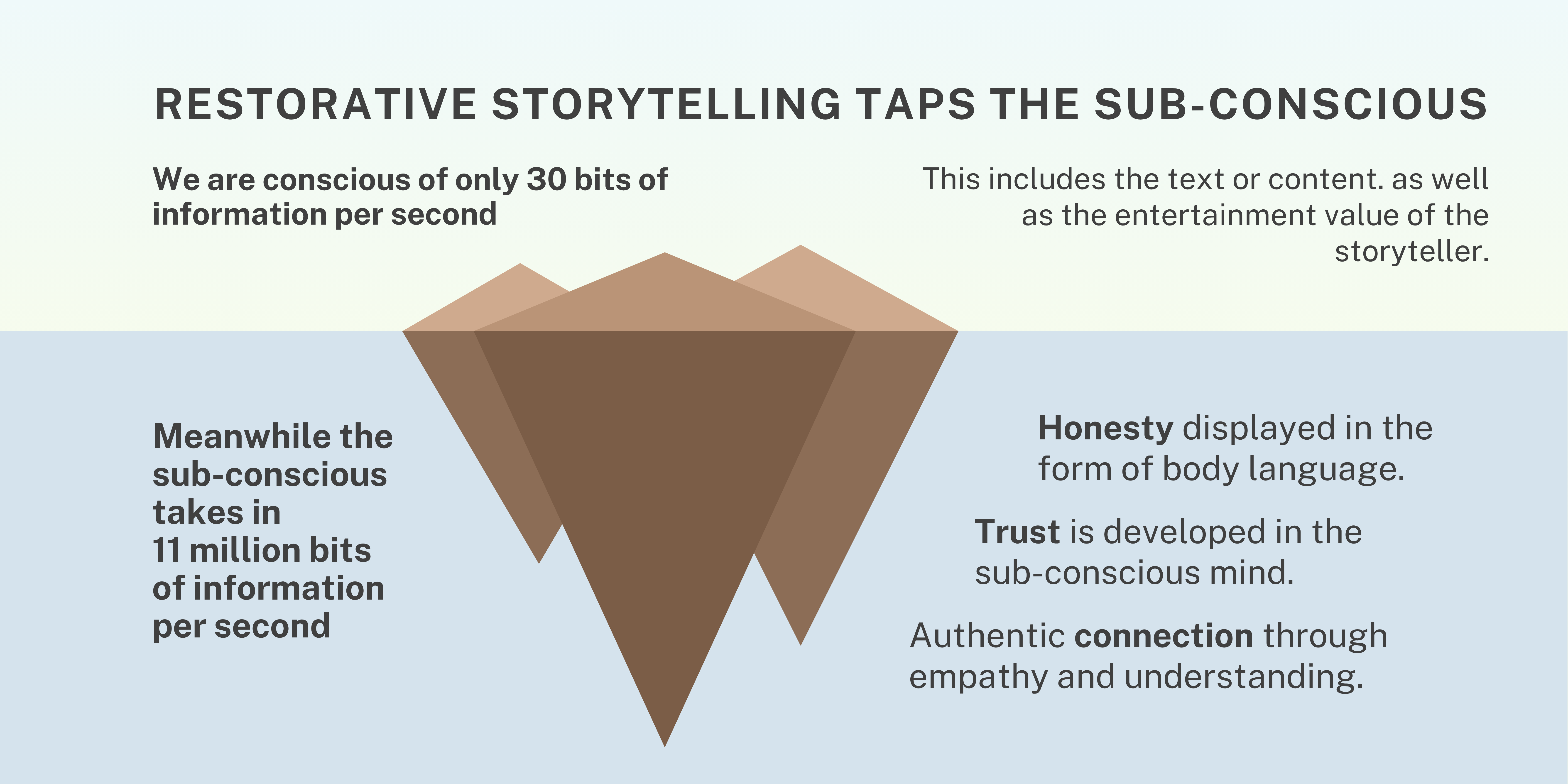
If everyone is in the same container, and understands the rules of the exchange, then the massive amount of information that would usually go to our subconscious is available to us through nonverbal communication and presence. We intuit important cues and signals. We build something together even if we don’t understand the trajectory. We trust.
This tends to be the biggest hill to climb when using Restorative Dialogue and truly any of the tools of RS: building and employing trust. We have been trained to prioritize our rational mind, even when we find so little satisfaction from its fruits. It was the mission of the Enlightenment age but we miss the superstition and mythology of all the other ages. We still want to be dazzled and surprised and we don’t really need things to make sense when we are moved. We want to cry together and laugh together even when we disagree.
This is the Essential We.
It continues to be more important to us than being right. The connection is of higher value than our own satisfaction or pleasure. We want to be an “us”. This is what is ultimately restorative.
Join a community of Storytellers and receive lots of free tools and courses. I'd love to meet you!
