The True Shape of Collaboration
Sep 06, 2026
Every collaboration is built on a series of connections. There is the connection between the individual collaborators and if we were to draw a line between each person, that collaboration forms a simple shape. If it is three people, then you have a triangle. Four a rectangle and five a pentagon. That shape is 2 dimensional and from our perspective, it is simple. We can see that connection, it is clear. Even if the connection is between two people, that simple line gives us an understandable starting place.
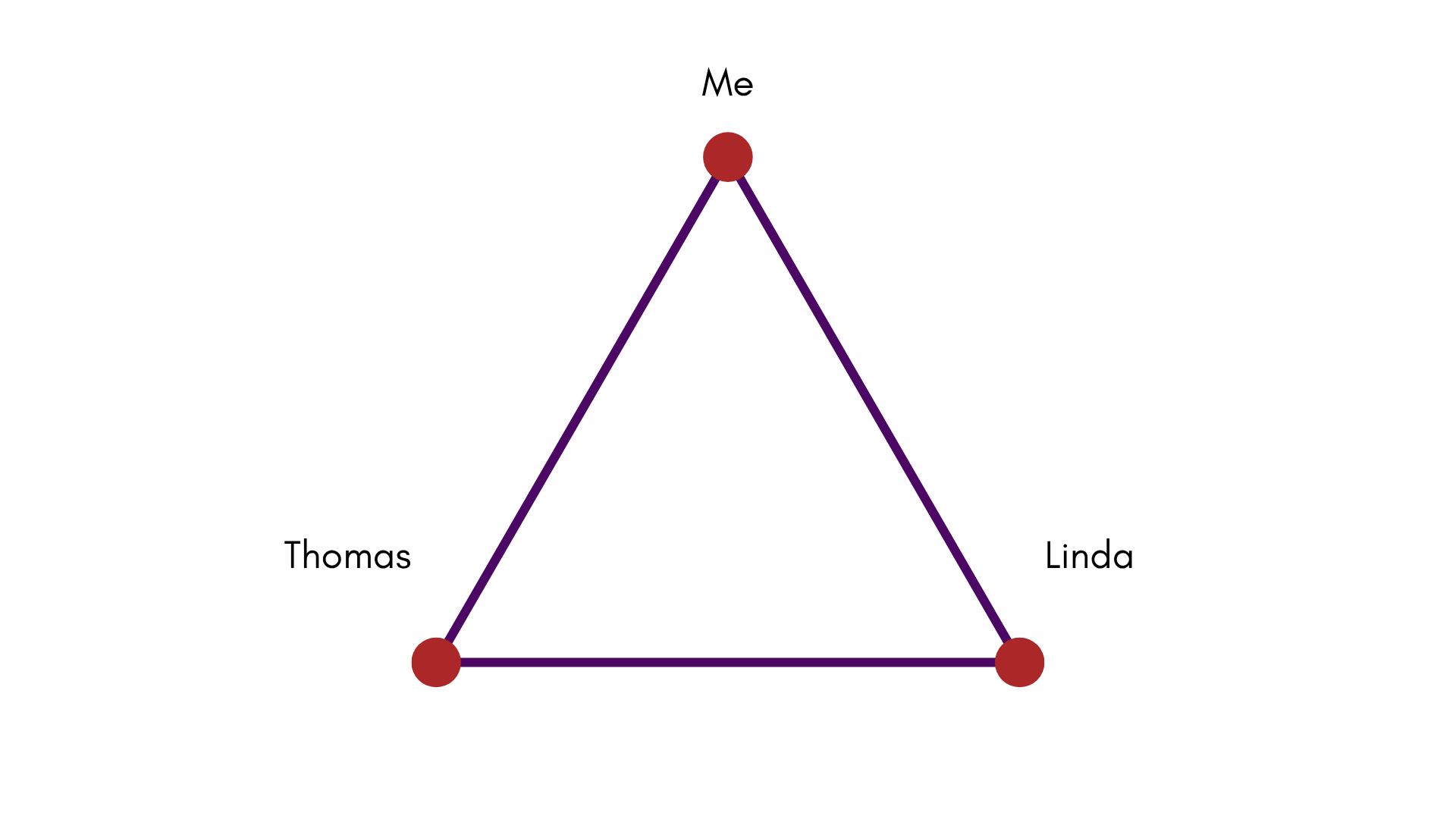
From this two dimensional perspective, collaboration is built on the line that connects us, like a telephone wire or surveying string—we are bound. We create something that is constricted by the line that binds us. It is an exclusive connection in that no other person is a part of that 2-dimensional shape. There is a clarity in knowing and mapping each of the stakeholders. Only the two or three or four that have been named as collaborators will be bound together. In this way, the shape is a kind of container, much like the container explored in Book #3 of Restorative Storytelling. It narrows the collaboration to those named stakeholders. It simplifies the story. We can state:
Thomas, Linda and I are going to collaborate
And then not only those three collaborators know who is involved, but everyone not included knows who is involved.
Like the container tool in RS, however, we must then set an intention. This will clarify the story, or the narrative that describes the collaboration. Now that we know the stakeholders, what are we doing? Why are we telling a story, or doing this project, or promoting this team, or building this house? Naming the intention is equally essential. It collapses the infinite possibilities of what these three stakeholders might do, and names one story or activity or goal.
Thomas Linda, and I are going to collaborate on a press release for a new play.
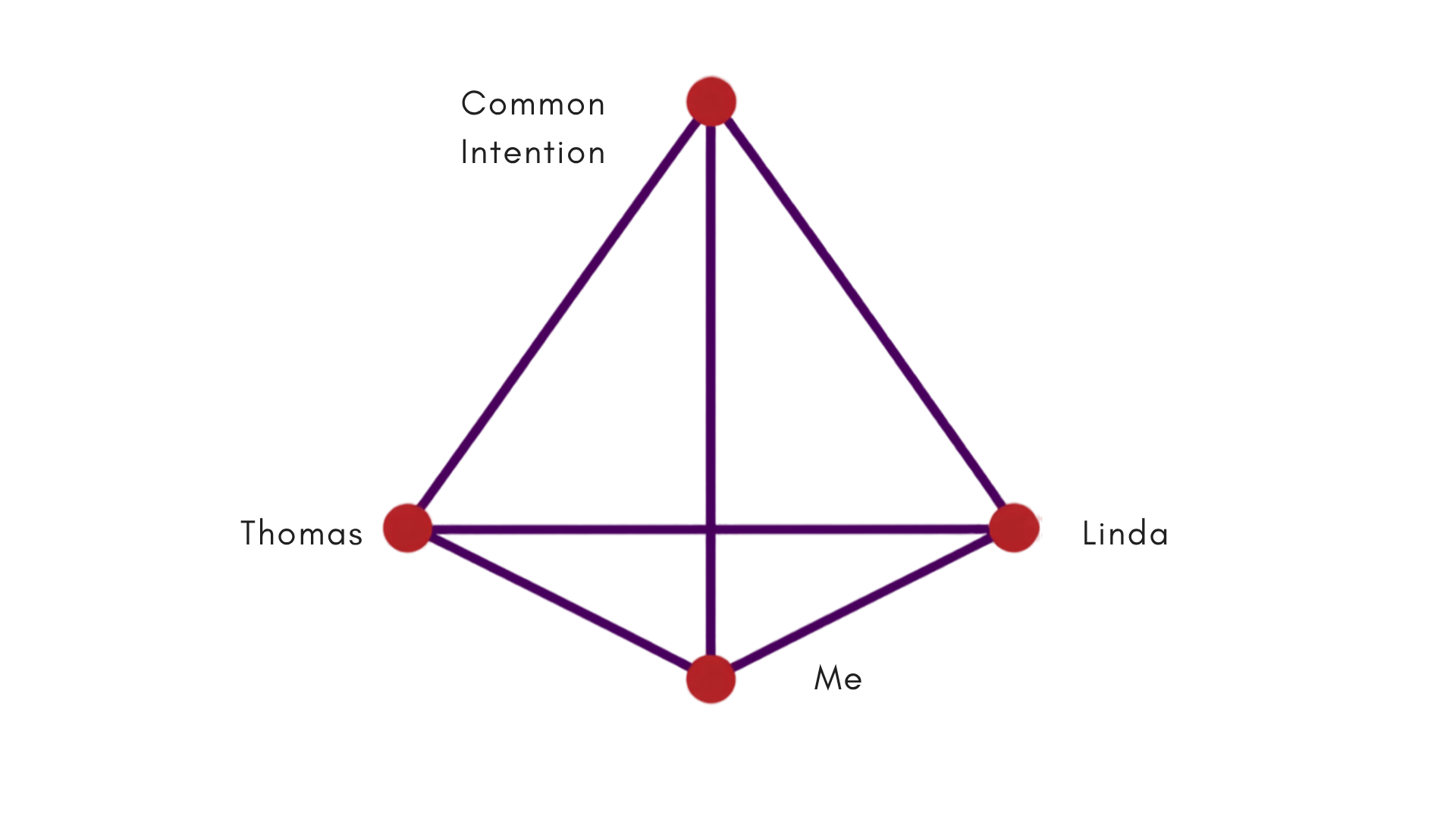
That clarity is a step toward the success of the collaboration, and since the clear intention touches each of the collaborators, the intention changes the shape from a 2-dimensional form to a 3-dimensional form. We now have a common axis, like the hub of a wheel that connects to each of the stakeholders, and thus we have a more complex shape. We now have a tetrahedron rather than a triangle, or a pentahedron rather than a square because the intention hovers above the 2-dimensional shape, creating a gem-like common point of connection. The shape has become more complex, and somehow more beautiful.
But there is another vital variable that impacts the collaboration: time. When does this collaboration start? How long will it take? How will we know when the collaboration is complete? Here we create a four dimensional shape that has connection between the stakeholders, a common intention, and an agreed-upon timing. We need this variable, otherwise the stakeholders might collaborate out of sync and work for different lengths or finish at different moments. If we are all a part of the same collaboration, we need to know who is involved, what we are doing, and when we are doing it. This will ensure that the collaboration will happen and fulfill its goal.
Thomas, Linda, and I are going to meet at 2 PM on Monday so we can create a press release by the deadline of Tuesday morning.
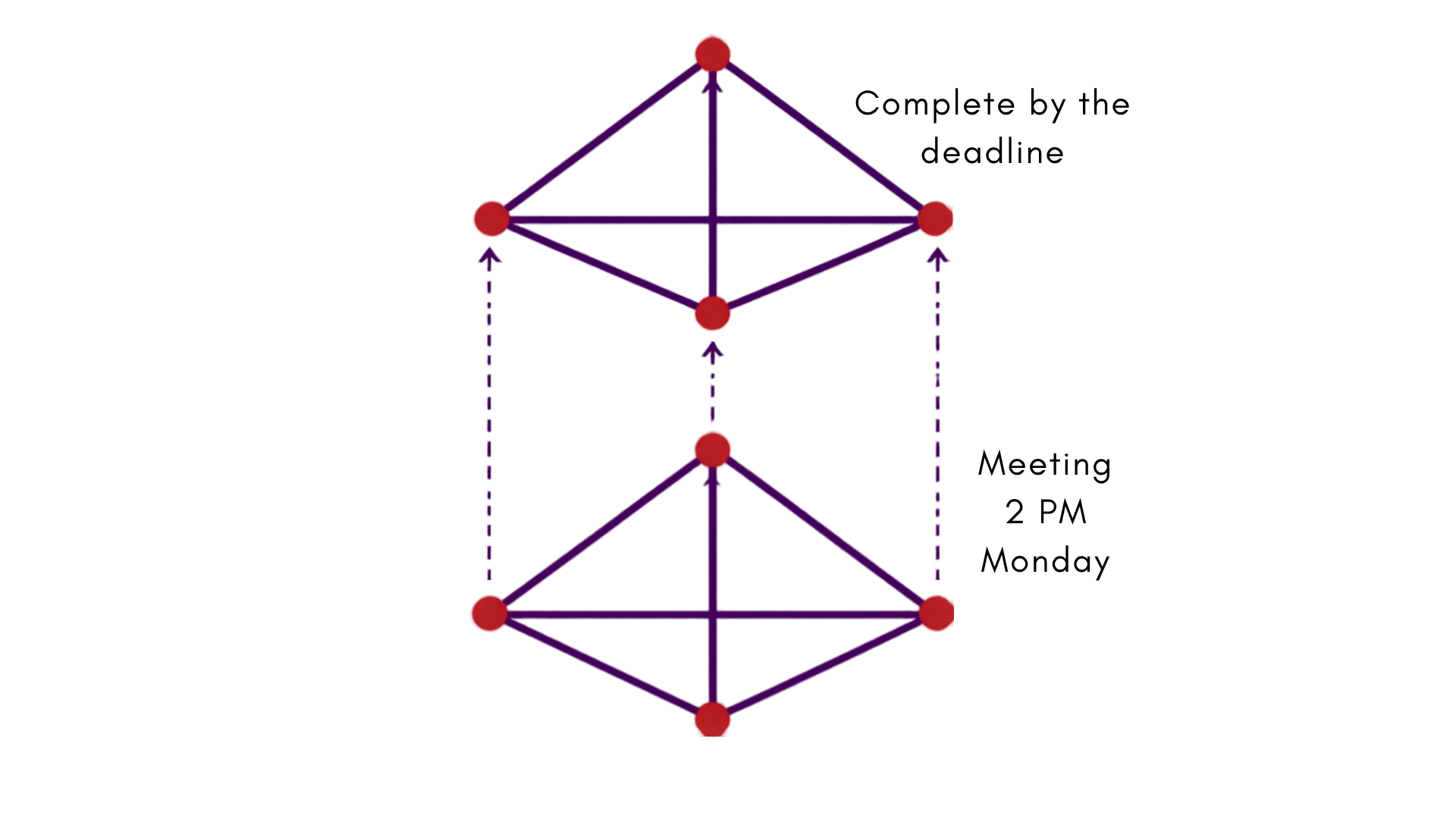
Collaborations function by those variables, and most stakeholders name only the 4-dimensional shape. It is a shape that makes sense. We can name all the variables and list them on a sheet of paper or in an email. If there are disagreements on any of the variables, we can discuss who is a part of the collaboration, why we are doing it, and when this is taking place.
In Collaborative Storytelling, the shapes are more complex, because the storyteller sees that there are more variables. Any story we tell is impacted by our experience and our imagination. Every one of us has a lived experience where we have learned things and overcome obstacles and felt shame from making mistakes. This experience is the foundation of an identity, and even if we attempt to be objective and non-biased, we cannot be divorced from our identity.
We also have imaginations about how this collaboration might unfold and whether or not it will be successful. We make plans and use our imagination to visualize the potential results. Before the collaboration even begins, we have considered the future and what might happen. In other words, our past and potential future have influence on the collaboration. That are also stakeholders.
Our last press release didn’t yield much, so this time, Linda will take the lead. We imagine Linda’s enthusiasm will make this press release a success.
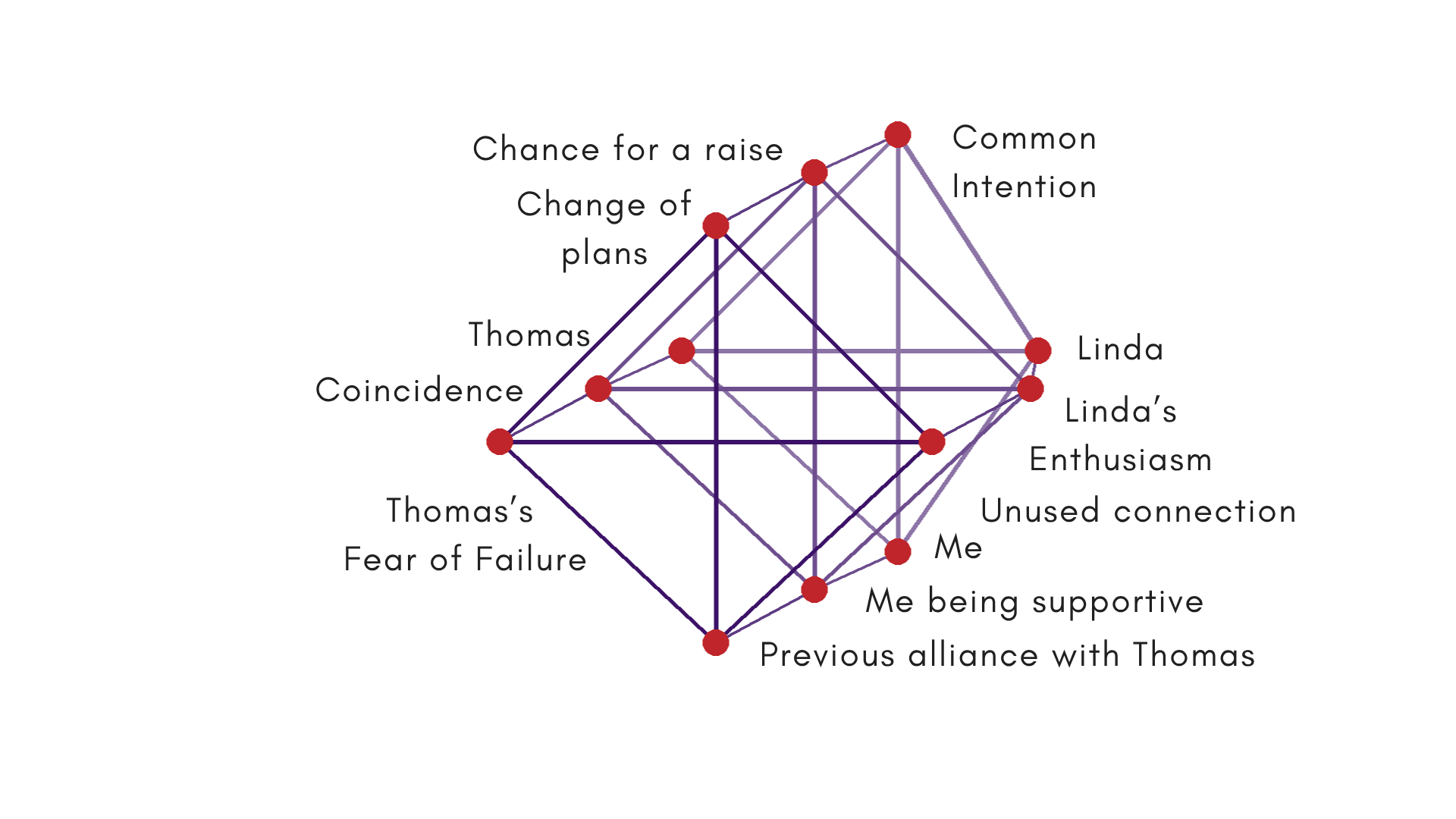
Including past experience and possible outcomes into the collaboration is complex enough, but there is more to include. If you have read the series on Intuitive Storytelling, we must consider the impact of multiple timelines, the observer effect, the multiverse, and then all the nonphysical multi-dimensional entities that might have a stake in the collaboration. There are our ancestors to consider as well as alternate versions of ourselves with different skills and experience. There are invested guardian angels or aliens or lingering spirits who might have an agenda we don’t understand. How are we to map subtle influences like that?
Good news! We don’t have to understand the full complexity of a collaboration before beginning. In fact we don’t have to consciously understand the collaboration at all. Collaborative Storytelling is the forward motion of the storytelling process. We can move forward as 3 and 4-dimensional beings without confusing ourselves over the full dimensional ramifications of our actions. We can suspend that understanding and full take it up in the final series on Dimensional Storytelling.
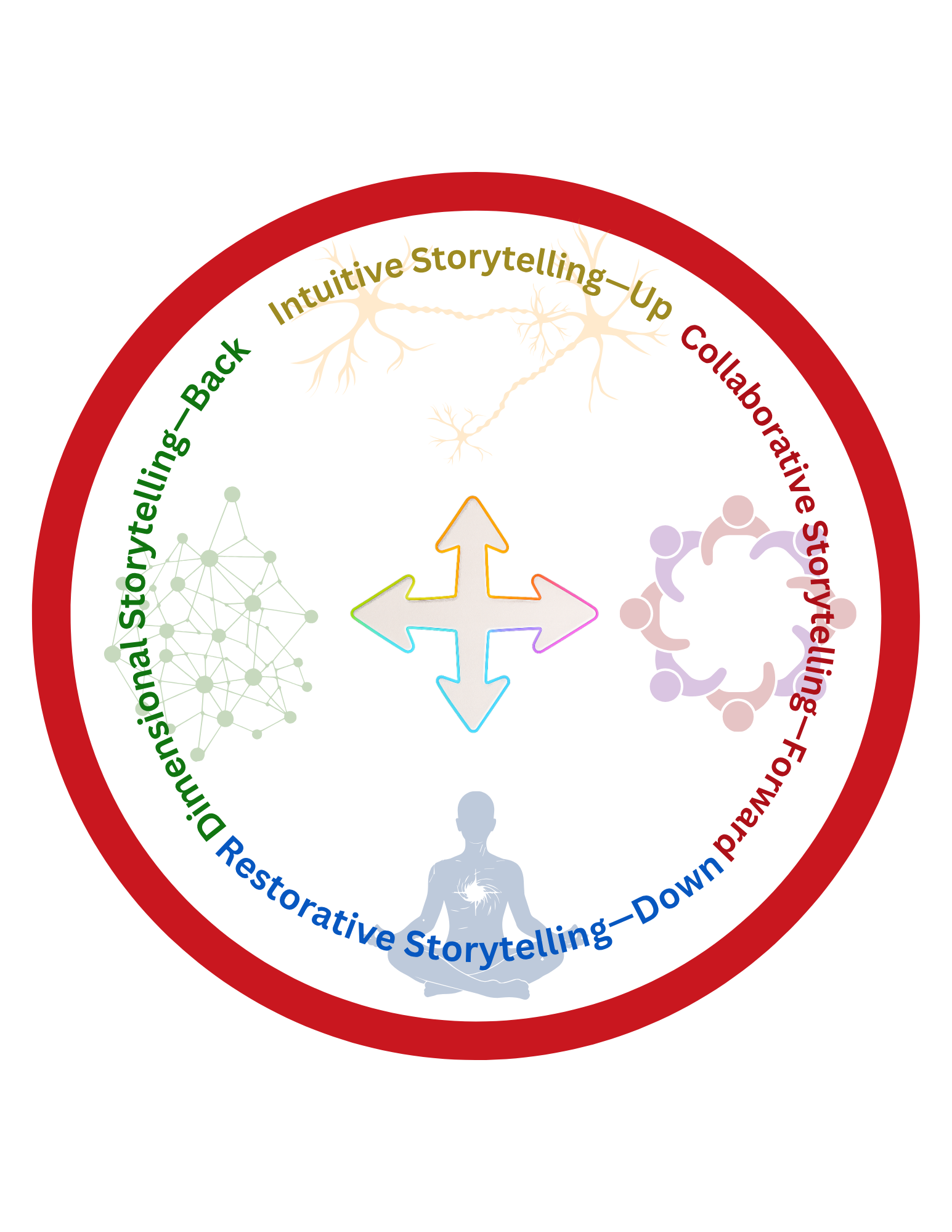 No, for Collaborative Storytelling, we take action. We move forward and make things happen. We take what we’ve learned from Restorative Storytelling (down) about the body and voice of the storyteller, and overlay that with the subtle dialogic practices of Intuitive Storytelling (up), and now we act (forward). We make. We do. In a world made of stories (and by now we are in agreement that the world is indeed made of stories), we not only impact that world, but we architect it.
Join a community of Storytellers and receive lots of free tools and courses. I'd love to meet you!
