Where to start with Intuitive Storytelling
May 22, 2026
The world is made of stories
This is the first mini-book about Intuitive Storytelling, so we will shift from the embodied, localized focus on the body and voice of the storytelling (the primary foundation of Restorative Storytelling) to the vast network of stories that is the home of Intuitive Storytelling. The framework for all the mini-books is directional: down, up, forward, and back. Each of the series of books under Restorative Storytelling, Intuitive Storytelling, Collaborative Storytelling and Dimensional Storytelling, correspond to a direction, and each direction has an intention as well as a profound result.
The seven mini-books of Restorative Storytelling, align with the “down” direction and offer tools intended to connect the storytelling with their bodies, with their voice, with the listeners, and with the group as a whole. This approach to storytelling results in a sense of community and trust. It is all about the connection.
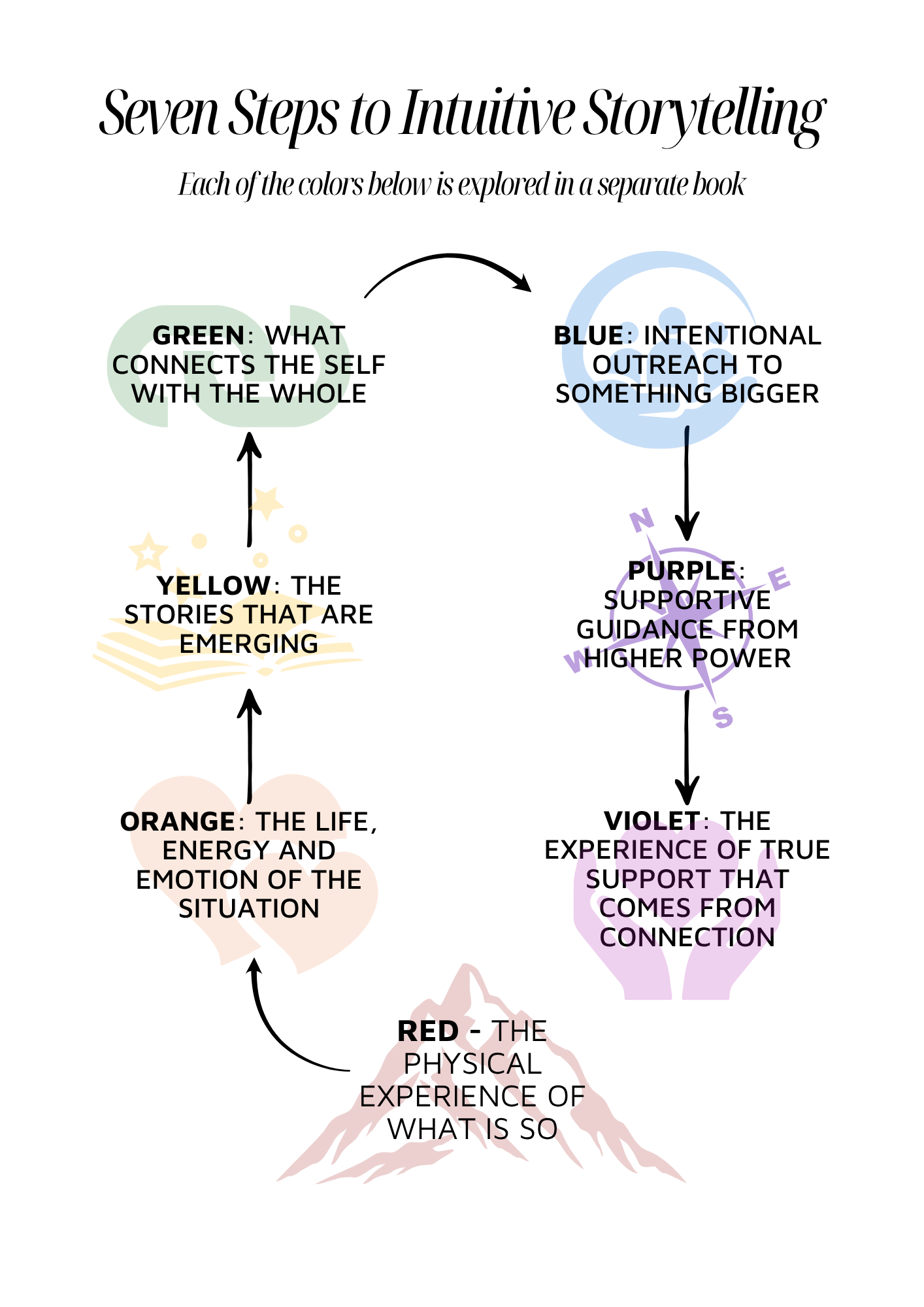
Intuitive storytelling, found in the “up” direction, describes seven steps a storyteller can take to harvest information from sources beyond their conscious mind. Depending on the framing of the storyteller, this can include the subconscious mind, from the annals of the physical world and universe, from the eternal record of time, and even from alternate timelines or the multiverse, if that is a part of the storyteller’s experience. It all depends on how the individual understands the nature of reality and their role as a storyteller.
Collaborative Storytelling, leaning in the direction “forward”, moves from the intentional groundwork set by Restorative and Intuitive Storytelling, and uses storytelling to build relationships. With Collaborative Storytelling, the storyteller seeks out action and manifestation, consciously engaging with the world as they know it, and making selective and targeted alliances.
Finally, with Dimensional Storytelling, resting in the “back” direction, the storyteller sees how themselves, the storytelling process, and the world is made of stories from a multidimensional point of view. They can see what is happening, how it all works, and then, if they wish, teach this perspective to others.
Intuitive Storytelling exists in a paradigm where the world is made of stories, that narrative is the fabric of our reality as human beings.
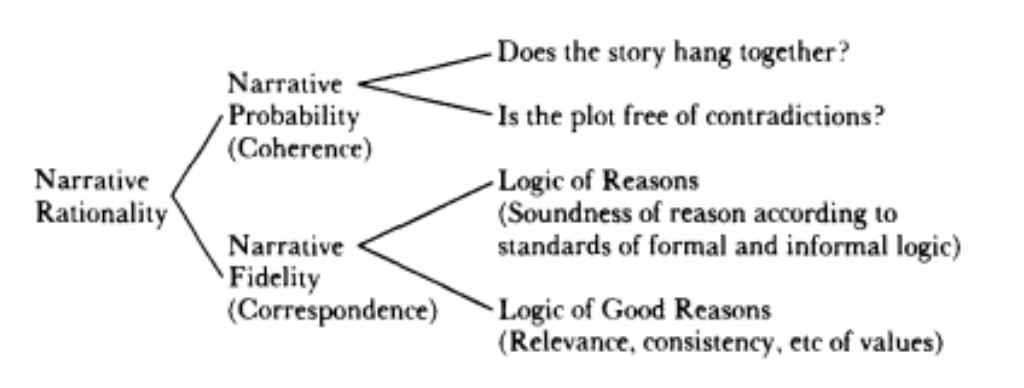
Walter Fisher developed his Narrative Paradigm Theory as an alternative to what he called the Rational World Paradigm, where the world is understood through a series of logical puzzles solved through rational arguments—through the collection and organization of facts. Fisher believed that as much as we humans liked to think we were logical and rational, the truth was we behaved more like storytellers in a world made of stories. In his Narrative Paradigm Theory, people spend their days constantly re-creating themselves according to narrative rationality. Narrative rationality consists of narrative coherence and narrative fidelity. Coherence recognizes the patterns and consistencies of a story, while fidelity is how a story can be true within the context of narrative rationality. In other words, we deem a story true when it fits with all the other stories we have integrated into our picture of reality. Facts and measurable data are not as important as coherence and fidelity. We build our world out of stories, and we pick which stories will comprise that world. This is why everyone behaves as if they know what is real and true, and that the foundation can be so different person to person.
Mathematics and quantum mechanics are more aligned with narrative reality than ever before.
Nobel prizes are being given to physicists that have proven local realism is false. What this means is that something doesn’t exist unless it is observed. The moon is a thing because we can see, measure, and talk about it. The moon will remain a thing so long as we continue to see, measure, and talk about it.
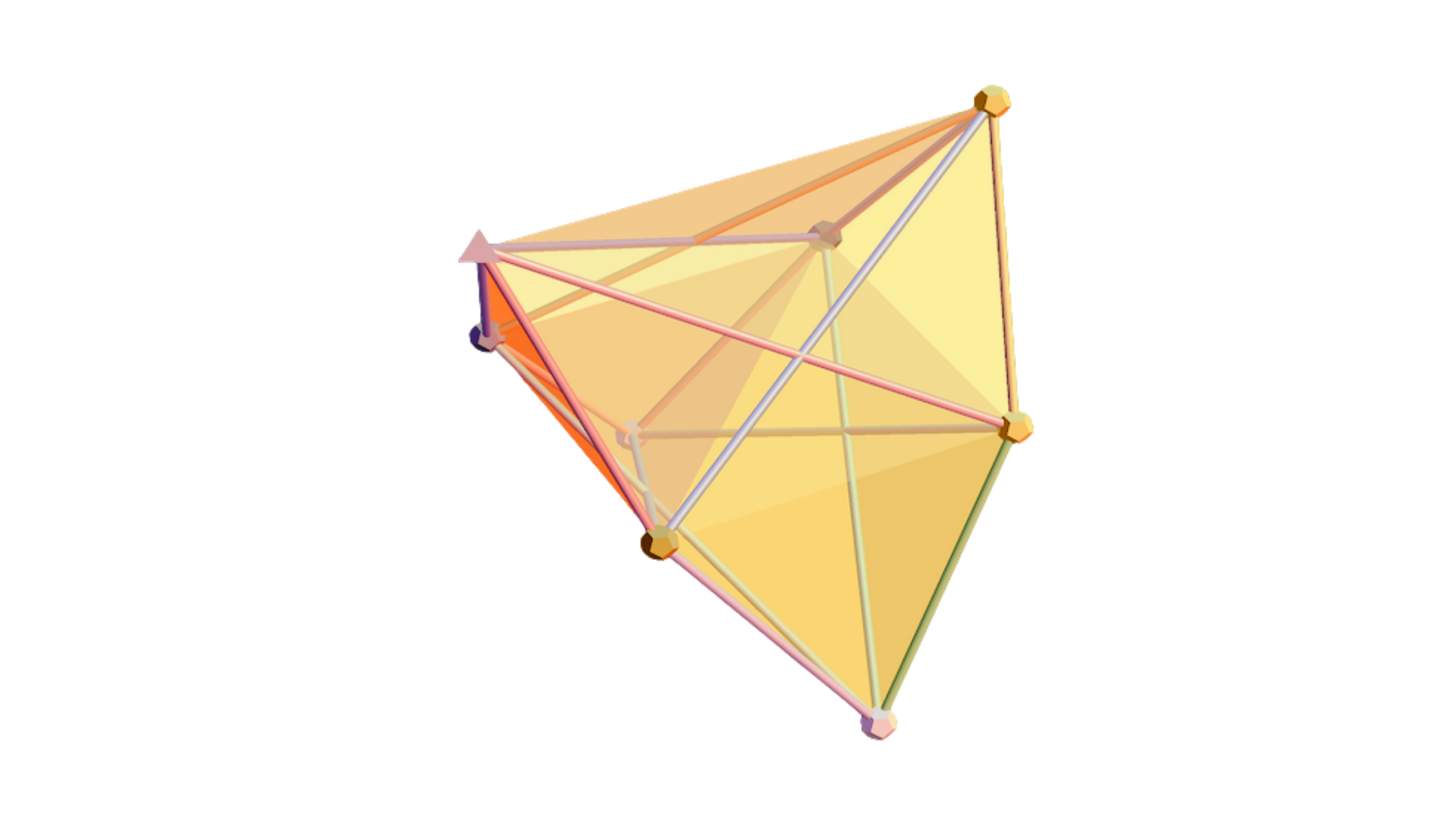
There is a shape that interests physicists which is called an amplituhedron. This geometrical object exists, they say, outside of space and time. Now how can this be? Apparently the amplituhedron has qualities that cannot be expressed mathematically within the constraints of space and time, and so the theory is that something must exist behind space and time. It is the only explanation that makes the math work. Some believe this fundamental property is consciousness, and there are some very interesting proposals on that front.
For the purposes of understanding and practicing Intuitive Storytelling, consciousness and storytelling are interchangeable.
Once upon a time people believed that illness was caused by a miasma, which is a kind of “bad air” attributed to misaligned planets. Miasmas no longer exist for most of us because it is not a part of our storied reality. What was once standard, has now disappeared. Instead, we have storied bacteria and viruses into existence, and they will remain “real” until we evolve or discover new stories. The color blue did not exist for the Ancient Greeks. They called it “wine dark”. It still doesn’t exist in certain cultures today because they have no story for it. The physical world is storied into existence. Blue appears once there is the story of blue—once it becomes “coherent” with the community's other stories of reality. The fabric of reality is woven with coherent stories that are experienced as true. The world is literally made of stories.
This does not mean that there are no atoms and molecules. This does not mean there is no God. This does not mean math is not real. It is a simple understanding that in order for atoms, God, and math to exist for us, they must cohere with an existing set of stories first. Our set of stories. This is also the case with fairies, Pleiadeans, magic potions, and true love—and this is where storytelling gets really fun and intuitive. What is fact and what is fiction? Is the world round or is it flat? It depends on the era and community in which that was asked. Did that cow die from a virus or an evil spirit? That depends on which stories are parts of your reality.
We live in a narrative age where we are encouraged to tell all our stories all the time. Through therapy, social media platforms, and participatory journalism, we proclaim our intentional and hopeful stories, while confessing the old stories, deeply held stories, embarrassing stories we sometimes wished we didn’t believe. All the narratives are presented on the same table, and often seen by all. Stories of group superiority, stories of religious providence, stories of personal destiny, and stories of technological solutions are posted all day long. From a community development point of view, it seems like oppositional stories will never mix, never get along, never find peace and compassion and reconciliation, and we can be left feeling overwhelmed. What are we to do? How can we have a meaningful impact and help transform the world into a more loving, empathetic, and supportive place when stories vary so widely and in such opposition?
This is why we put our focus on storytelling. In a world made of stories, the most powerful person in the world is the storyteller. The one who sees the matrix for what it is can transform it. We are not merely spinning yarns for our amusement, we are changing the world, one image at a time. Restorative Storytelling prepares the storyteller. Intuitive Storytelling gives us access to all the stories that have been or ever will be. Intuitive Storytelling shows us there is so much more happening in this and other worlds, and it hides nothing.
Join a community of Storytellers and receive lots of free tools and courses. I'd love to meet you!
