How to be a Confident Storyteller in Three Steps
Mar 09, 2026
Confidence is a catalyst for success.
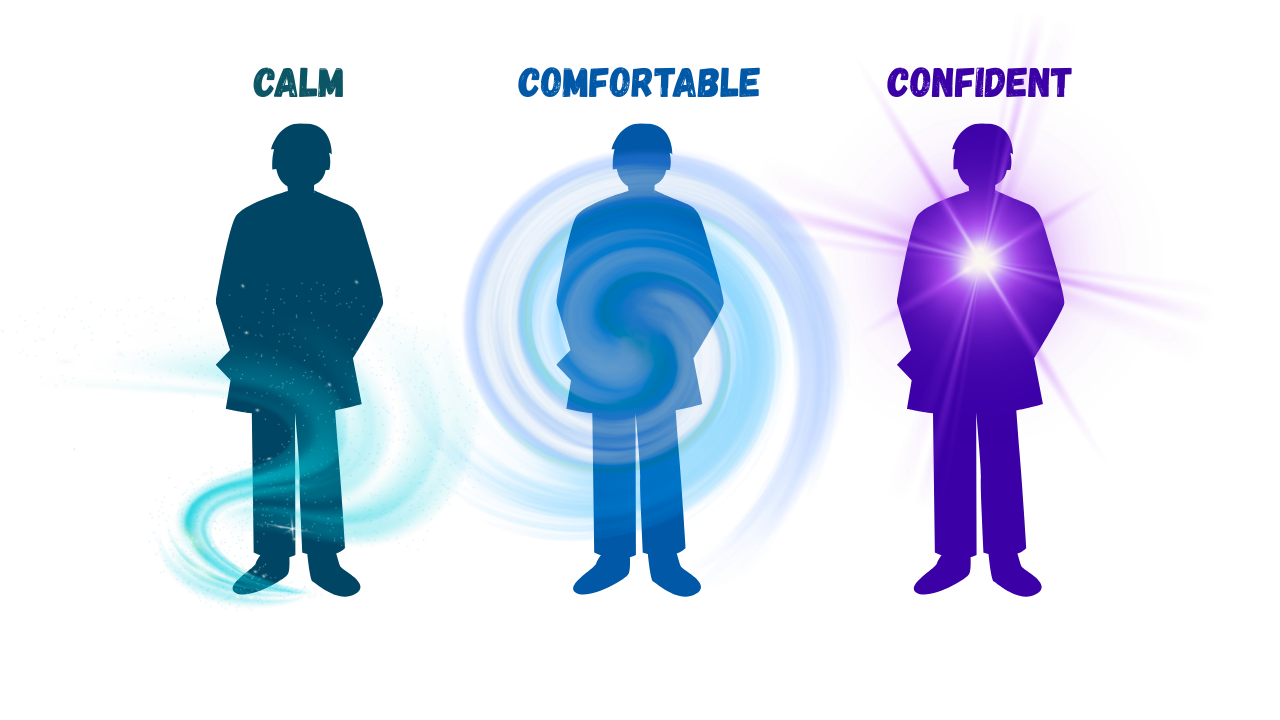
If you drill down on the role of confidence in our lives, it appears to be more than a state of mind or attribute: it is more like a substance of transformation. When we are confident, we usually experience a myriad of associated feelings like calm, serene, self-assured, and strong. Our behavior also change—we become focused, determined, capable, and resilient. Confidence has been linked to success and is used interchangeably with self-esteem and self-efficacy in the context of academic or professional achievement.
Teachers want to be confident storytellers.
One of the emergent questions that came out of my doctoral dissertation was about the role of confidence in effective storytelling. 54 teachers participated in a 3 month training in Restorative Storytelling and they were explicit in their hopes for the training: they wanted to feel and experience confidence when telling stories. The word confidence was used more than any other word in the intake survey. Here are some examples of answers to the final question in the survey, “What are your hopes for this course?”
“To feel confident enough as a storyteller to weave in stories more frequently throughout my day.”
“More confidence, better retention.”
“To feel confident telling meaningful stories throughout each day.”
In fact, the word “confident” or “confidence” was used in 20 of the 54 answers to this question. It was the most repeated word in the collection of answers. The only other word that was close to this frequency was “learn.”
My 6 co-researchers agreed that in order to pursue this emergent questions, we needed a coherent definition of confidence, so we included this in the final stage of research and asked the participants for their definition.
“I guess I see an image of like standing with my hands on my hips, kind of like Wonder Woman pose, or something.”
“So, the confidence is like I can keep people engaged while I internally am just like, let me see what comes up. It’s almost like being comfortable. With a pause.”
“Confidence, I guess to be trusting myself. Like trusting where the story is going, trusting that it’s going somewhere, that you’re just not gonna aimlessly, you know, like hee-haw around and like, not ever get anywhere what you’re trying to say, because sometimes the words just don’t come to you.
“So, I think it just comes from like trusting that the that if you tap into like this empathetic self, or your own experience, and even to the experience of others. that the story is gonna unfold. However, it needs to, for the listener, and for yourself.
“I’m confident enough to kind of tell a story more on the fly.”

Confidence is linked to trust, and trust connects the storyteller with their listeners.
So if confidence is useful to the storyteller, and something to be cultivated, then how does one cultivate confidence, self-esteem and self-efficacy? Most programs and approaches start with action and habit building. By employing one’s will and engaging in structured action, one builds competence and then mastery, and then one can enjoy the benefits of confidence. There are solid data that shows this approach works.
You can also become confident by sounding confident.

Storytellers who use the directional vocality tool affect their listeners by changing the feeling in their own bodies. You can learn more about this tool here. When they feel like they are floating, they inspire the listener. When they sink into the earth, they build connections. They motivate by leaning forward and create safety by leaning back. There are several nuances in the four directions but the framework is the connection between somatics and effect—how the storyteller feels and what happens to the listener. The tool, however, is vocal. The quality of the voice delivers the result. The storyteller can use the same process to become confident.
Step one: what does confidence feel like for you?
Feeling confident is not a rubber stamp. Everyone has their own way of feeling confident, so we begin by accurately describing what confidence feels like. What is a confident presence? To do this, you need to remember a time when you were confident. Think back through your life and remember a moment when you were self-assured and felt like “you got this.” The size and scope of the situation is irrelevant. You can be any age. The goal is the feeling. If you can’t recall an instance, then use your imagination. What do you think confidence feels like? Imagine feeling the way you want to feel and then take notes; what does your body feel like? What does your chest feel like? Your throat? Your hands and feet? What is your energy like? What temperature do you feel? Take as many notes as you can about the sensations associated with feeling confidence.
Step two: speak out loud while feeling confident.
Just talk. Keep the imagination alive, only now you need to talk out loud. Notice the quality of your voice while you are talking. Be curious about the direction of your voice. Is it more forward and has a great deal of heat and motivation to it? Or would you say it is more down, and feels deeply connected to earth and to other people? More inspired in up? Or more safe and secure in back? Is it all four but in a particular mix? See if you can find where your confidence in a directional way.

Step three: associate this vocal quality with being confident.
Practice ‘trying on’ your confidence voice. Go over your notes and remember what your voice was like when you were imagining yourself to be confident. Then try it. Speak out loud with this vocality and notice if your confidence builds. Tinker with it. Adjust your vocality to see if you can build more confidence by adding more of a particular direction. Float up for more mental acuity. Sink down for more connection to your emotions. Lean forward for more heat and intensity. Lean back for more detached awareness.
You will find that with practice you can create different “flavors” of confidence that you can summon through your tinkering with vocality, and notice how each variety has a different effect on your own experience, but the experience of the listener as well!
David Sewell McCann EdD, is a professional storyteller, a published author, and the architect behind the Restorative Storytelling™ program. He has written and recorded over 1600 original stories for Sparkle Stories, and teaches faculties, municipalities and change-makers how to use storytelling more effectively with their communities. Learn more about each of the storytelling tools by purchasing the workbooks here.
Join a community of Storytellers and receive lots of free tools and courses. I'd love to meet you!
