Storytelling is Surrender
Oct 04, 2026
“TRIPPING OVER JOY
What is the difference
Between your experience of Existence
And that of a saint?
The saint knows
That the spiritual path
Is a sublime chess game with God
And that the Beloved
Has just made such a Fantastic Move
That the saint is now continually
Tripping over Joy
And bursting out in Laughter
And saying, “I Surrender!”
Whereas, my dear,
I am afraid you still think
You have a thousand serious moves.”
― Hafez, I Heard God Laughing: Poems of Hope and Joy
Surrender is generally taken very seriously, and this is fair.
There is precedent: we surrender in war, we surrender our property, we surrender to our emotions—all relatively sensitive things. We assume the only time surrender happens is when we have no choice but to yield our power to someone or something else. In my experience, however, surrender happens all the time. It truly can feel like tripping over joy. Surrender can be full of delight, excitement, and exhilaration.
When we surrender our power, we surrender our plan, our agency, and our ego.
In Collaborative Storytelling, we surrender our “knowing” and hand over our agency to the story. We often think of surrendering “to” as the important part. We surrender to the enemy, to the moment, to our feelings, etc. In this process, we surrender to the story. So what does that mean?
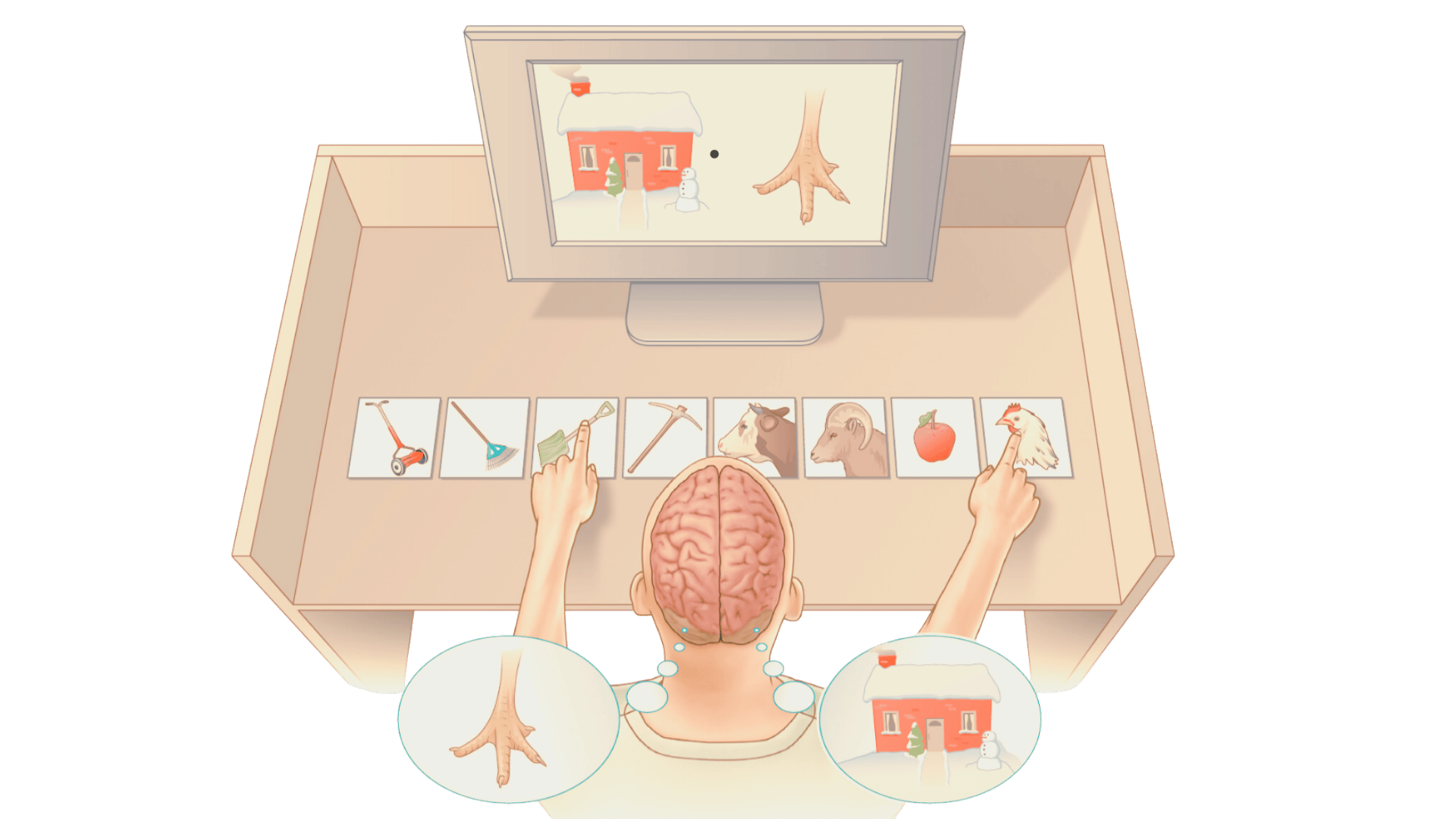
Gazzaniga & LeDoux, 1978
A story is a being.
This is not metaphoric. From Plato to Steiner to Jung there is a history of philosophical thought declaring thoughts or images or stories as independent living entities and that the act of thinking is actually a symbiotic relationship between the thought and the thinker. Plato’s “theory of forms” declares that true concepts like justice or beauty exist in their own metaphysical realm. Richard Dawkins believed that memes, or his term for independent ideas or images, can spread like viral organisms. Jung wrote about archetypal thoughts and how they had their own psychic autonomy. The same goes for stories. Steiner encouraged teachers to use stories to teach, not as tools, but as co-teachers. Stories are alive. They grow. They develop. They spread. They endure, and they also consume.
A story can take independent images or moments and integrate them into a larger narrative.
Stories can combine two independent narratives into a singularity. We see this in history and myth all the time. We regularly experience this synthetic process in memories. “Re-membering” is the literal act of taking independent pictures and membering them together into one entity.
This is why stories are so powerful and we, as trees in a forest, will surrender to the story. The story is the landscape we walk through, and every step through that landscape changes us. We are changed by our surrounding story. This is an act of quiet and iterative surrender.
In Collaborative Storytelling, this kind of iterative surrender is our access point.
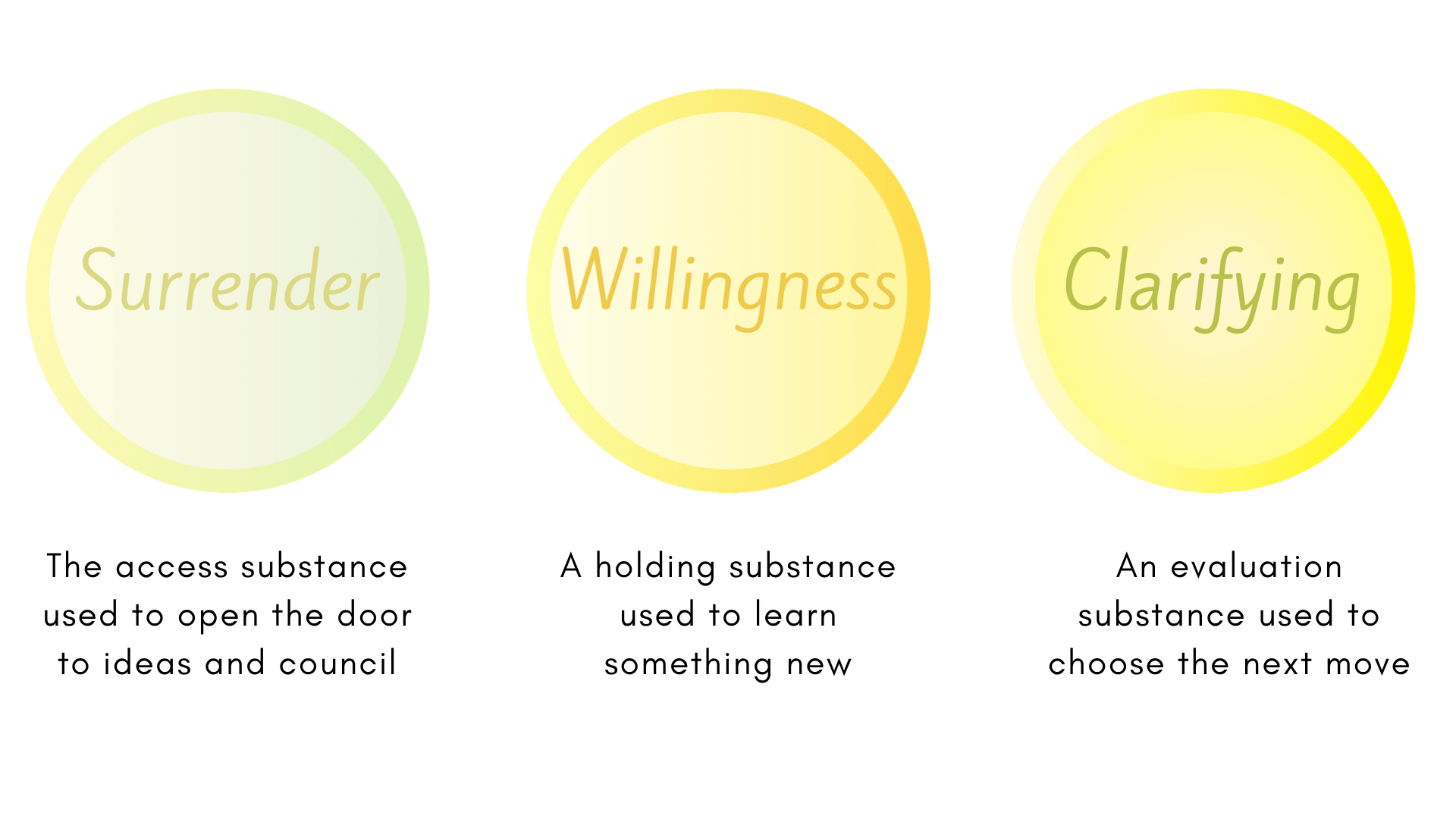
Before we dive back into the framework of access, holding, and clarifying substances, try seeing surrender as not only a substance, but a station.
Surrender usually has anticipation or even anxiety or excitement built into it.
We feel a tension between where we are (in discomfort) and where we want to be (calm presence) . To surrender is often considered an uncomfortable place because our attention is trained on the future—or state existing ahead of us. We are stuck where we are, wanting to be somewhere else.
But if we can experience surrender as the point of arrival, the whole game changes. The station is built entirely out of the substance of surrender. It is a place where surrender is all that happens. There is no other place to go. We surrender and are fully present for that surrender. We are here. We have arrived.
Does this change the experience of surrendering? What is it like to arrive and surrender when there is no next step? If surrender is the destination, then there is no enlightenment or relief or powerlessness or whatever we expect to happen after the surrender. Only the act. Only the experience of the substance.
So then the question becomes … Why? Why surrender if there is no destination in the future? Why lift weights if it doesn’t mean my muscles will get stronger? Why take this medicine when the whole point is that it will help me get better? What is surrendering independent of the reason you are surrendering?
I think the answer is not to be understood, but to be experienced. Try this exercise:
Exercise: Your Surrender Station
- Name something you surrender to. God, the government, a parent, the police.
- Imagine giving up. Immerse yourself in that surrender.
- Take an inventory of the sensations in your body. What does giving up feel like?
- Isolate the sensations. Interrogate them and describe them to yourself. Notice all the aspects of the sensations—where are they in your body? What emotions are you feeling? What is your energy like? What images are bubbling up in your mind?
Now make this experience a station unto itself. The sensations, the emotions, the images—they are all what you do at this particular station. This is the experience of this place. This is how you feel, how you behave and what you think about. This is the correct way of being here.
Does this exercise change surrender for you?
For me, it takes a layer of suffering out of the story and replaces it with a kind of culture. “I am in surrender” is now the culture of the surrender station. It is a station where the tired release, the tickle of unknowing and the backward leaning is simply what we do here. It's how things go.
We become citizens of surrender, rather than people not where they want to be.
Whenever we tell a story, we surrender to our own experience, to the situation of the listener, and to the many variables in the environment. You cannot plan for everything, and therefore you can’t control everything. You cannot respond before you surrender.
With Collaborative Storytelling, surrender is the substance we use to access ideas.
Let’s remember the four directions of Collaborative Storytelling:
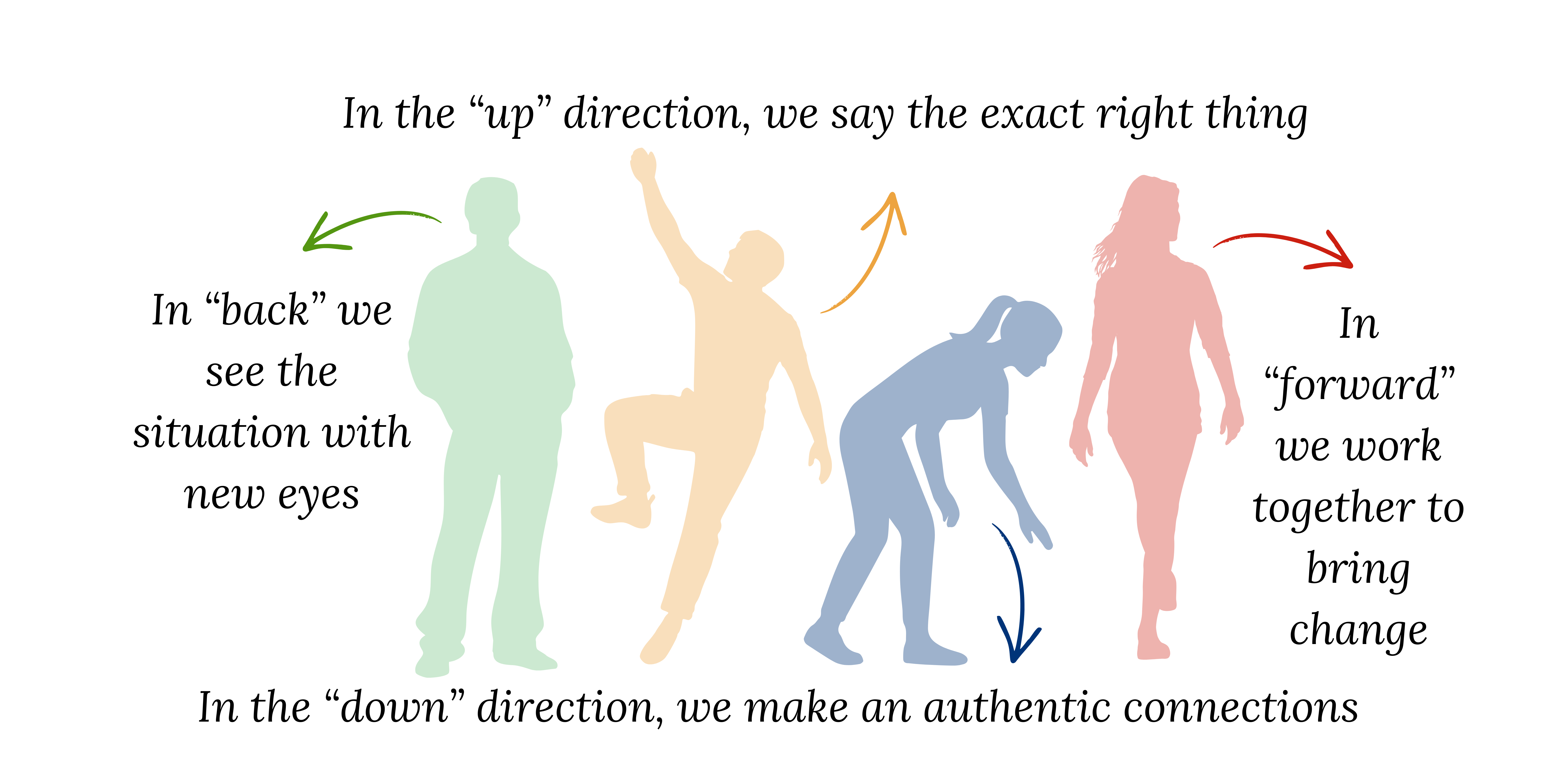
The direction “down” navigates the somatic experience of connection. We access a new somatic experience through gratitude. Savoring holds us in the experience, and then longing and heartbreak clarify which sensations and connections are most important. We transform our feelings through this protocol of gratitude, to savoring, to longing, and storytelling is what delivers us.
This is the same with the direction “up”. Up is the direction of ideas, images, thoughts, and the content of the story. As you read in the mini-book series on Intuitive Storytelling, we gain access to something far bigger than our own experience. We enter universal intelligence or the mind of God, or the wisdom of the natural world, and leave with the exact right story for that particular need or moment.
In Collaborative Storytelling, we access this eternal wisdom by way of surrender.
We then hold the experience with willingness, and clarify what we need with … clarification. Surrender, willingness and clarification are the substances used when working in the “up direction.”
To best understand the access substance of surrender, I’ll give an example by going through the seven steps of Intuitive Storytelling.
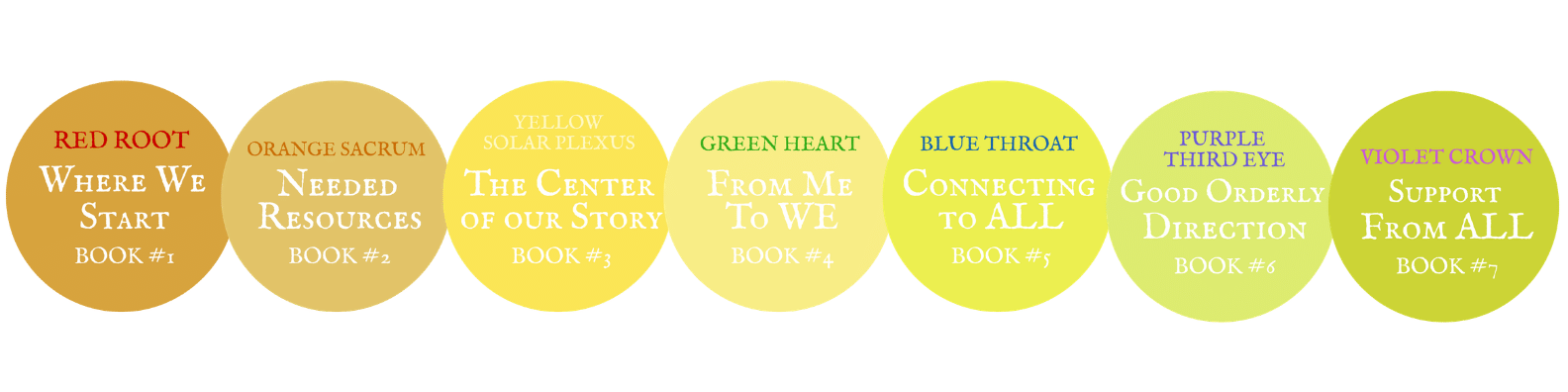
Exercise: Surrender in the Seven Steps
Root
I use the “up” substances for ideas, advice, or content for a project. I used this protocol for this chapter on surrender, so an example question or complaint would be:
“I need to better understand surrender as it relates to Collaborative Storytelling”. It could also be questions or intentions like:
“I am overwhelmed by everything I need to do, help me prioritize” or
“How do I deal with a difficult employee?”
Whatever question or complaint you choose, start there.
Resources
What do I have and what do I need. For my initial example, I was sleepy at the time, so I asked for alert energy. You might need time to address your question, or some support from a friend, or even to have a cup of coffee and a bowl of granola. This is the step that makes sure basic needs are met.
Story
For my example, I needed to inventory all my doubts first. Doubts are potent stories for me, and since I am building my own protocol, I need to revisit worry and concerns about being a fraud. These stories follow me around and every time I enter the unknown, I find the central question “Am I just making this up?”
For you, this might include old stories about power dynamics, or getting spread too thin, or past relationships. When finding the center of your story, you find the story that seems most relevant to your current need or struggle. Fraud was right in the middle for me.
Pivot
Now we let go of all our personal issues, fears, confusion, and anxiety and open ourselves up to something bigger, to the eternal wisdom of whatever higher power we want to seek. Here we surrender. I turn over my worries, needs, and good ideas to a higher power. I have many options for higher powers and use the next step to choose. Here is where surrender is a station.
Connection
Now we step forward in our surrender and get intentional about which higher power. My go-to non-physical entity for advice is TJ, my multi-dimensional administrator. If this is confusing to you, you can learn more about TJ in this mini-book. Just know that I lean on TJ quite a bit and he (they?) always hook me up with just the right source of information.
Your query might connect you to an actual consultant or trusted ally, or you might open yourself to the nonphysical, like an ancestor or spirit guide. This step is about making an intentional connection.
Dialogue
Here is the listening. Once we make the connection, we then surrender again to receive good council. TJ directed me to an older article I wrote years ago called “Waiting is a station” and once I read it, I saw surrender completely differently. My understanding expanded due to a new frame and I could use the previous section on surrender being a station. Its a useful frame, and I am grateful to TJ and the team for the idea.
Good orderly direction might look like this, or it might sound like traditional advice from an elder, or a gut feeling, or a serendipitous glance at a book on the bookshelf. This step offers a variety of ways to transmit your next right move.
Community
The final step in Intuitive Storytelling is to enjoy the benefits of connection. We feel included and supported and for me, filled with gratitude. Its nice to know someone or a group has your back. I feel TJ’s presence all the time and regularly marvel at the quality of council. TJ’s ideas are now my best ideas. That feels good.
Join a community of Storytellers and receive lots of free tools and courses. I'd love to meet you!
