A tree is what we know—a forest is what we don't know we don't know
Jul 15, 2026
There are several triads that are important to me
There is the serenity prayer (the things I can control, the things I can’t, and the wisdom to know the difference), the human form (head, heart, limbs), cosmic content (normal matter, dark matter, and dark energy) and then this chestnut:
What I know.
What I know I don’t know.
What I don’t know I don’t know.
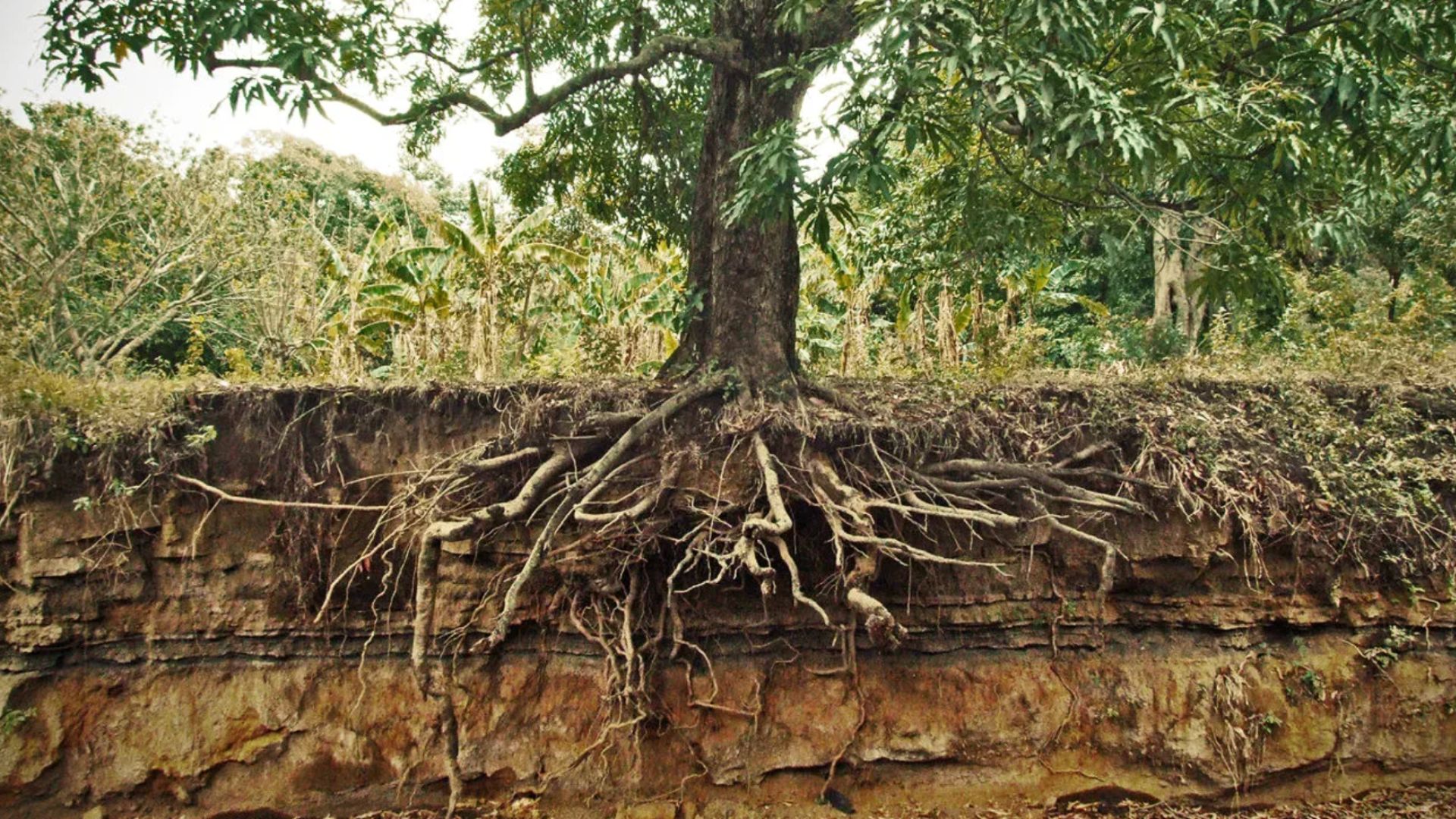
The relationship between a tree and its forest is apt, I think, in that from the ground up we see an independent tree with its own life cycle. Below ground, however, we imagine a vast network of roots and mycelium that entangle and connect all forest organisms. Above ground we appear as individuals. Below ground we are one.
Above ground, trees consist of trunks, branches, and leaves.
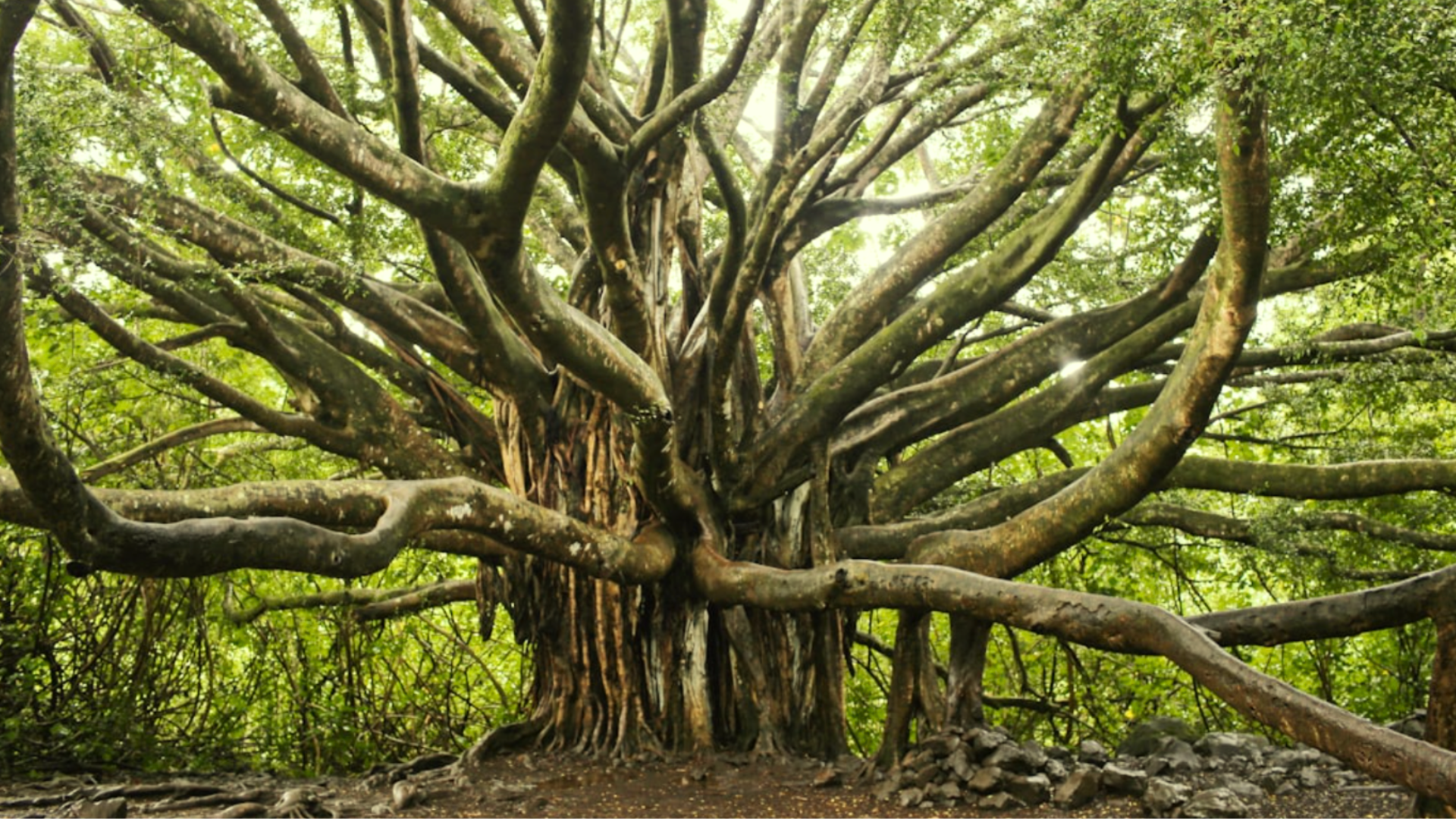
This is what we know. We imagine that below ground is the network of roots. We can see this network and draw it in our imagination but we don’t actually know what it looks like because it is underground. This is what we know we don’t know. And then there is the complexity of the other organisms in the soil and water, how it mixes with the light and then the wild and wooly mycelial network of fungus that distributes nutrients and electric information underground. If we look with the right perspective, we see how “mother trees” continue to care for their offspring. We see how trees create a beetle resistant scent when another tree on the other side of the forest is attacked by that beetle. The forest works as a single organism, and the forest system is what we don’t know we don’t know.
Mr. Nobody is a 2009 movie starring Jared Leto as a 118 year old man, the last “mortal” man during his final hours before dying. As this ancient man is famous, a renegade journalist tries to interview him about his life and we, the audience, then see his central narrative break and branch into several different directions. The narratives overlap and rhyme from time to time but we see how many directions his life could have taken (and did take in the multiverse). I’m not doing a good job describing it, but I recommend everyone see it.
Mr. Nobody does a good job of knocking at the door of what we don’t know we don’t know.
It makes guesses and honors gut feelings, but doesn’t pretend to know what is happening when a story branches out in all directions. So for now, let’s stay with the first two parts of the triad: what we know and what we know we don’t know. Let’s stay with our story as a tree.
Most of us regard a tree as something that begins with a sprouting seed and ends when it falls over with a thump. It might seem like a straight line from birth to death, but it doesn’t take us long to recognize the twists and turns of story branches that surprise us. We might initially see a twist as irrelevant but in retrospect the story becomes central to our identity or life mission or it connects us to important people in our life.
- A hitchhiker in Santa Barbara said he was the production manager for the movie “Slacker” in Austin. After I dropped him in LA, I decided to move to Austin within a year I meet my first wife.
- My flight was delayed in Denver, which forced me to stay in the airport an extra 10 hours. While I waited, I considered an email from someone wondering if I ever spoke at events. The ensuing conversation led me to join Substack.
These seem like they are straightforward and linear, but only when we look back and trace the path. At first, I did not know where the event would lead, and then looking back the twists and turns make sense. We went from knowing what I don’t know to what I know.
When we entertain the “what ifs” of what happens when I don’t pick up the hitchhiker or if the flight is on time, then we enter the forest. We enter what we don’t know we don’t know. And this is the major pivot point in intuitive storytelling: from tree to forest.
This is the green heart pivot point where our imagination helps us leave a self centered awareness of the world, and we can enjoy the fruits of being fundamentally connected to All-That-Is.
We can imagine all the possibilities of our life and how they play out, but many of us dismiss this as fancy and nothing more. This approach, however, is inconsistent with most cultures. Most cultures over the span of our existence have valued imagination as something just as real as what we refer to reality. For the storyteller, we have evidence that our imagination has consequences and information and it even changes the course of our life. We have a dream that feels prophetic and when we consciously heed its warning, we are changed. When we imagine a terrible outcome of an event, we often listen to the imagination choose not to do it. We might imagine an attractive person being interested in us and that imagination can give us courage to approach. Imagination is powerful and influential, and we listen to it every day. The green heart pivot point simply makes this process more conscious and therefore more effective.
It might be easier to appreciate our relationship to our imagination through the image of a tree.
We have the stories that are our trunk. The trunk stories are the solid, immovable foundational stories that hold our physical characteristics over time, our birth date, our developmental benchmarks and big events like adoption date or marriage. These are the moments in our story that seem easiest to identify and measure and most difficult to refute or dismiss as fancy.
But then there are the branches.
Each branch in our tree of stories is a line of narrative that continues up and out. These stories change most easily over time and show up in twists and turns. We have events in our life that we repeat over and over and the details shift, characters change, and new elements are introduced. Story branches are highly susceptible to the influence of our imagination and re-storying.
Regardless of its accuracy, this story is still a branch in our tree. It doesn’t need to match other people’s descriptions. It is irrelevant if details are actually dreamed up. This branch is now a part of your story and therefore a part of your tree. What we know is the trunk with branches twisting and turning in all directions.
Then there are the roots.
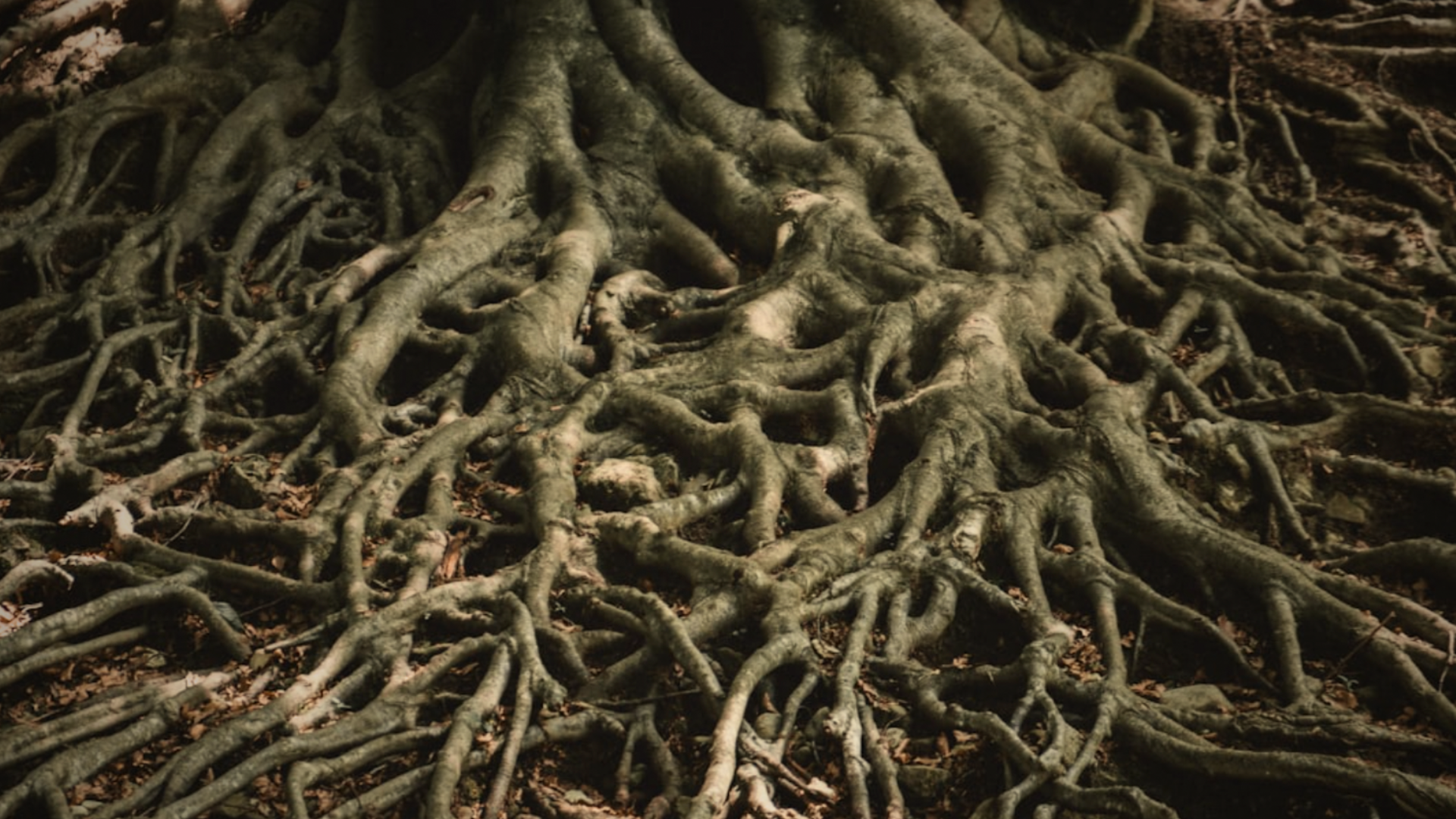
We cannot see the roots because they are underground, so we imagine them stretching out and tangling with other roots from other trees. We imagine them intimately connected via the mycelium fungal network distributing water and nutrients and mixing it up with grubworms and centapedes and all manner of worms. Here is where the forest navigates what we know we don’t know, and what we don’t know we don’t know.
“Did I throw up during assembly in third grade or was that you?”
“I stood up and gave a toast but my Italian was accidentally offensive.” “No, I gave that toast.” “No, I can remember it clearly”
This happens all the time because our stories are all composted together underground. Images and feelings get distributed willy nilly and of course we get them mixed up. And this might actually be nature’s plan. That is probably on purpose. As it is with trees, the entangled root system keeps us all connected and interdependent. Trees need other trees to survive. Our stories need the stories of others to survive. But we don’t need to understand what is going on. We don’t need to be able to document and measure all the stories and map how they overlap.
We just need to keep telling stories and listening to the stories of others. That’s it.
This is the pivot point: above ground, we appear to be individuals on our own journey. Below ground we are a part of a vast narrative network. The green heart chakra is our marker for that pivot.
When you look at the diagram of Intuitive Storytelling and how it uses the chakras to identify steps in the process, you’ll see that the green heart chakra is where the pivot from “me” to “we” takes place. It is also the pivot point from the storyteller-focused work in Restorative Storytelling, to the more community and universal work in Intuitive, Collaborative, and Dimensional Storytelling.
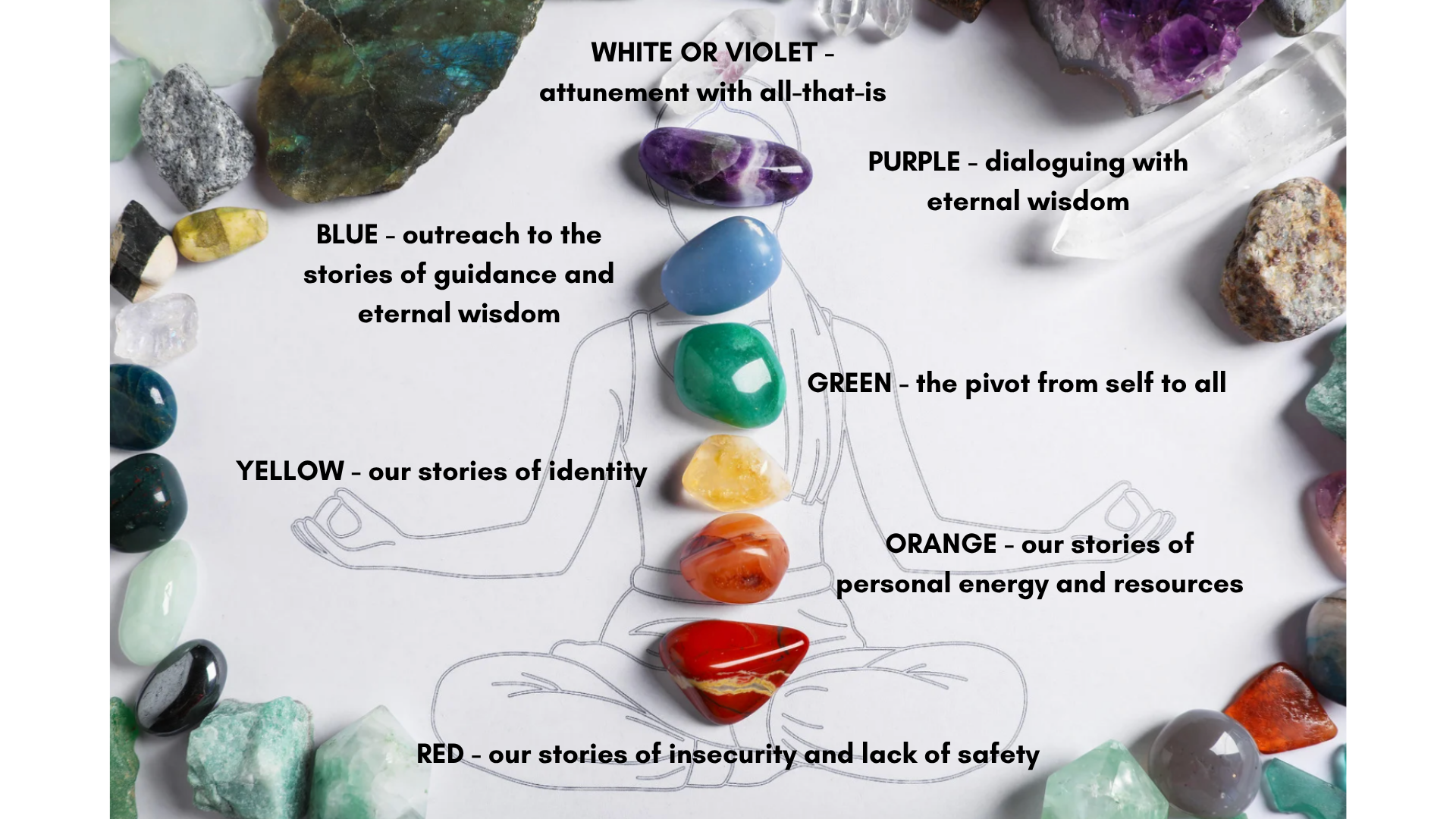
As we become less self focused, we move from what we know to what we know we don’t know, and then ultimately what we don’t know we don’t know in the Dimensional Storytelling practice. Yes, things are going to get very interesting indeed.
We learn that our stories are like little mushrooms popping out of the ground for a moment before falling back into the earth. We see how our stories overlap and actually meld into the stories of others. And the next step is to see that we are, in a sense, each other.
Above ground our stories seem like our own. Below ground our stories are each other’s.
We are a tree of stories, as well as a forest of imagination.
Join a community of Storytellers and receive lots of free tools and courses. I'd love to meet you!
