What is your Storytelling System?
May 04, 2026
I’m fond of James Clear’s quote:
"You do not rise to the level of your goals. You fall to the level of your systems".
This has been my experience. No matter how awesome my imaginings and intentions might be, there needs to be a clear system in place in order to ensure that it happens. For me, Restorative Storytelling™ is that system.
Systems aren’t common parlance in education or parenting, but I find Systems Thinking to be a vital methodology with both—we just tend to use different words. Systems Thinking identifies a system as a set of interconnected elements that work together as a whole to achieve a specific purpose. It is relational and dynamic rather than mechanical. It is complex rather than complicated, in the same way that an airplane is complicated and a teenager is complex.
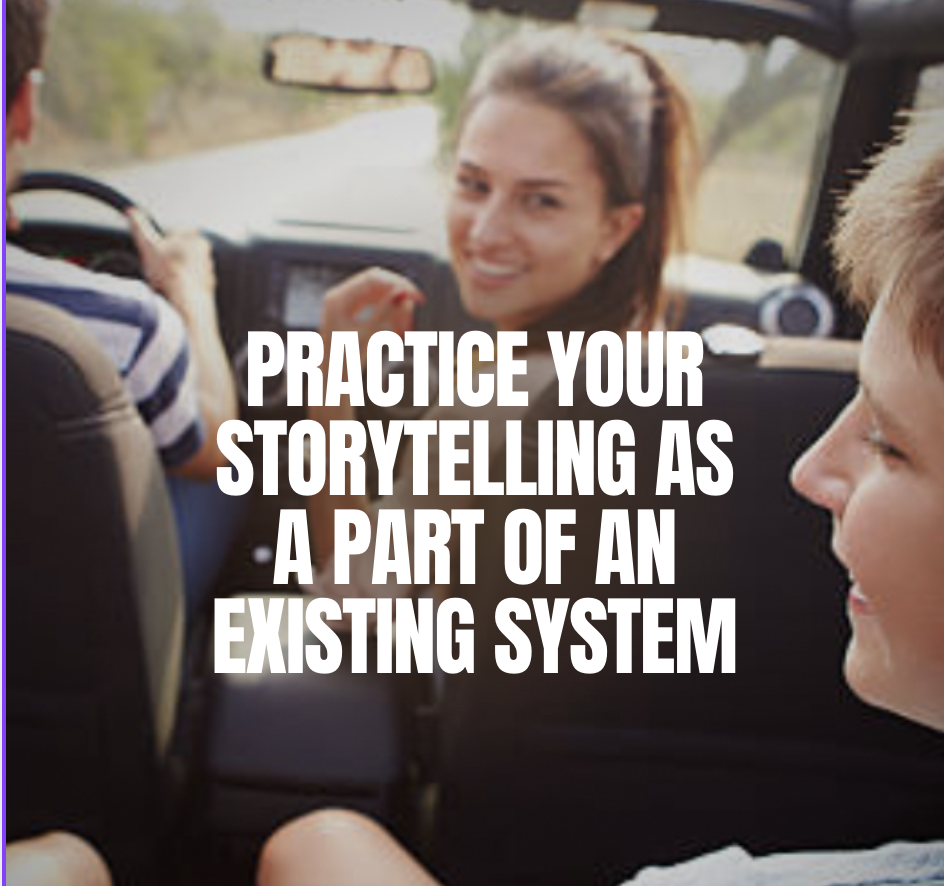
You can take apart an airplane and, though it is complicated, figure out how it works. Not so with a teenager.
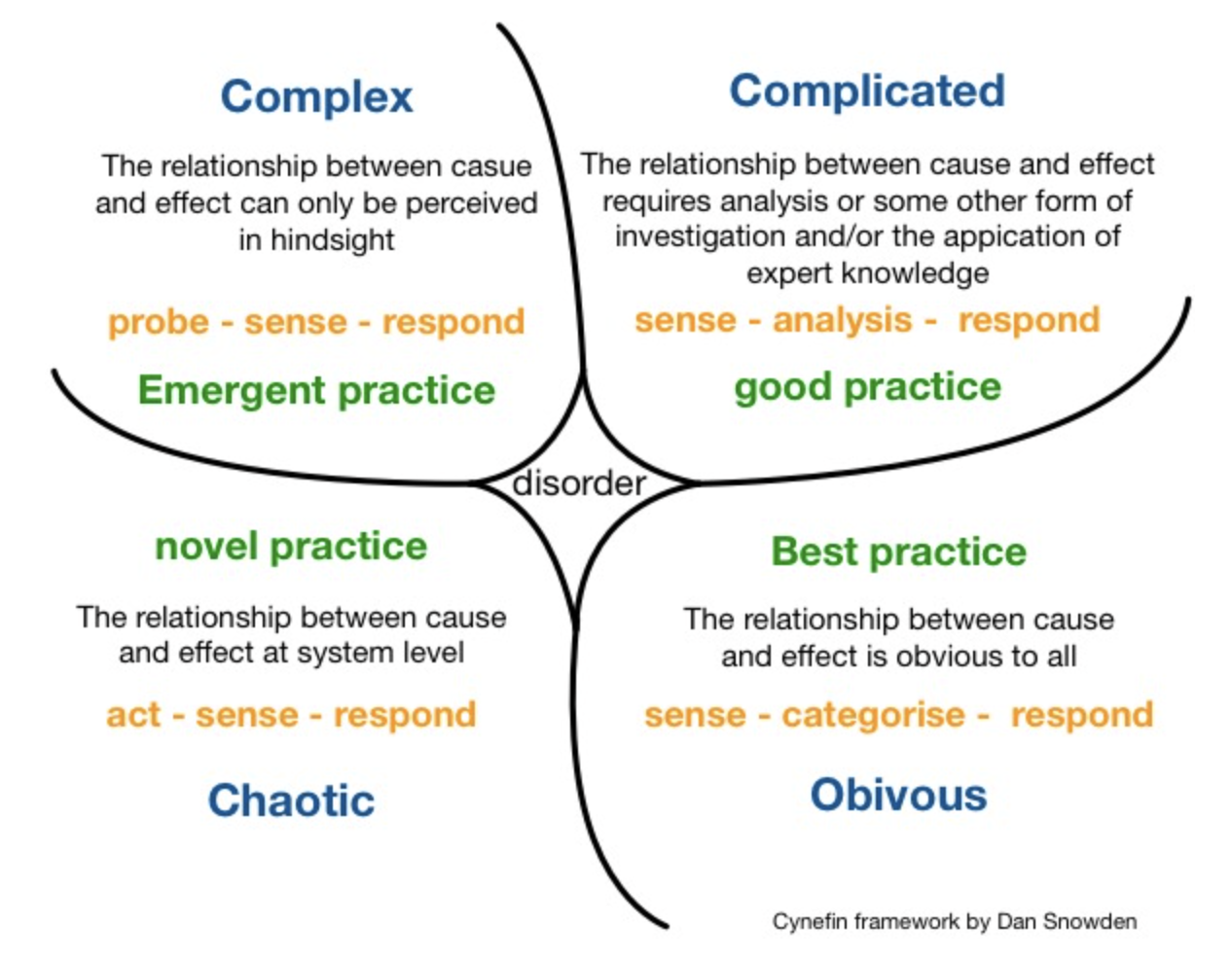
Complex Adaptive Systems (CAS) and David Snowden’s Cynefin both focus on the shift from complicated to complex with protocols built to see situations “where they are” and evolve them from chaotic and disordered toward something more navigable and curious. Both are less interested in being prescriptive and analytical, and inclined toward being intuitive and sensing.
Systems Thinking Leadership was a foundational framework for my dissertation because the tenets align so elegantly with Restorative Storytelling. Peter Senge describes Systems Leadership as an approach where leaders “build relationships based on deep listening, and networks of trust and collaboration start to flourish” (Senge, 2015). This deep listening, trust and collaboration is essential if a storyteller wishes to be effective. In The Dawn of System Leadership, (Senge et al. (2015) the three basic tenets Systems Leadership are listed:
-
Seeing the larger system
-
Fostering reflection
-
Shifting from reaction to co-creation
Seeing the systems within a storytelling event can give a voice to all the participants, and make room to find emergent themes, and clarify the “mythos” of the community. The goal of Restorative Storytelling is to create connection and community, so uncovering the buried mythologies and beliefs of a community will be messy and complex but essential to support any lasting transformation.
Most people see storytelling the way branding experts see it, as a kind of impression management (Tedeschi, 1981) where people will consciously try to influence the impressions of other people. A goal might be to either impress or manipulate: to create brand love or motivate a desired action. The leadership world knows that storytelling is innately attractive to most human beings and not only an effective way to garner attention, but an enduring way to create mobilizing images that continue to affect the listener long after the story is over.
Restorative Storytelling recognizes this, while prioritizing service and interdependence.
It is a “we” event, where effective storytelling is experienced as a two-way exchange—where the teller gets immediate feedback from the listener, and then integrates feedback to better serve the listener, the story, and the moment.
Many power structures use storytelling as a one-way transaction: to attract, hold, and manipulate the attention of the listener with the intention to change their behavior (Ong, 2023). It is like Freire’s (1972) “banking model” where the transactional information comes from the powerful authority and is foisted on the oppressed recipient. This places all the authority with the storyteller and rewards the better entertainers, writers, and speakers, while the listener becomes a passive pawn. It also denies a core tenet of RS: that the best storytellers truly are also the best listeners. This is a key implication when seeing storytelling as a way of restoring and developing community, especially if the community in question is a family or school.
Every school, coop, and household is unique and makes adjustments to best meet the needs of their particular children or student community. We all have a desire to better serve our children and students, and seeing the family or school as a system gives the storyteller an opportunity to engage in reflection and then co-create a vision forward. If the goal of systems leadership and complex adaptive systems is to solve problems for long term benefit of a community, then the input of all the stakeholders needs to be clear, accurate and heard.
With storytelling, your system is the relationship between the storyteller and the listener, the environment in which the story is taking place, the timing of the story and the complexity of your intentions. Identifying the system within a storytelling event will make the story far more effective and enduring.
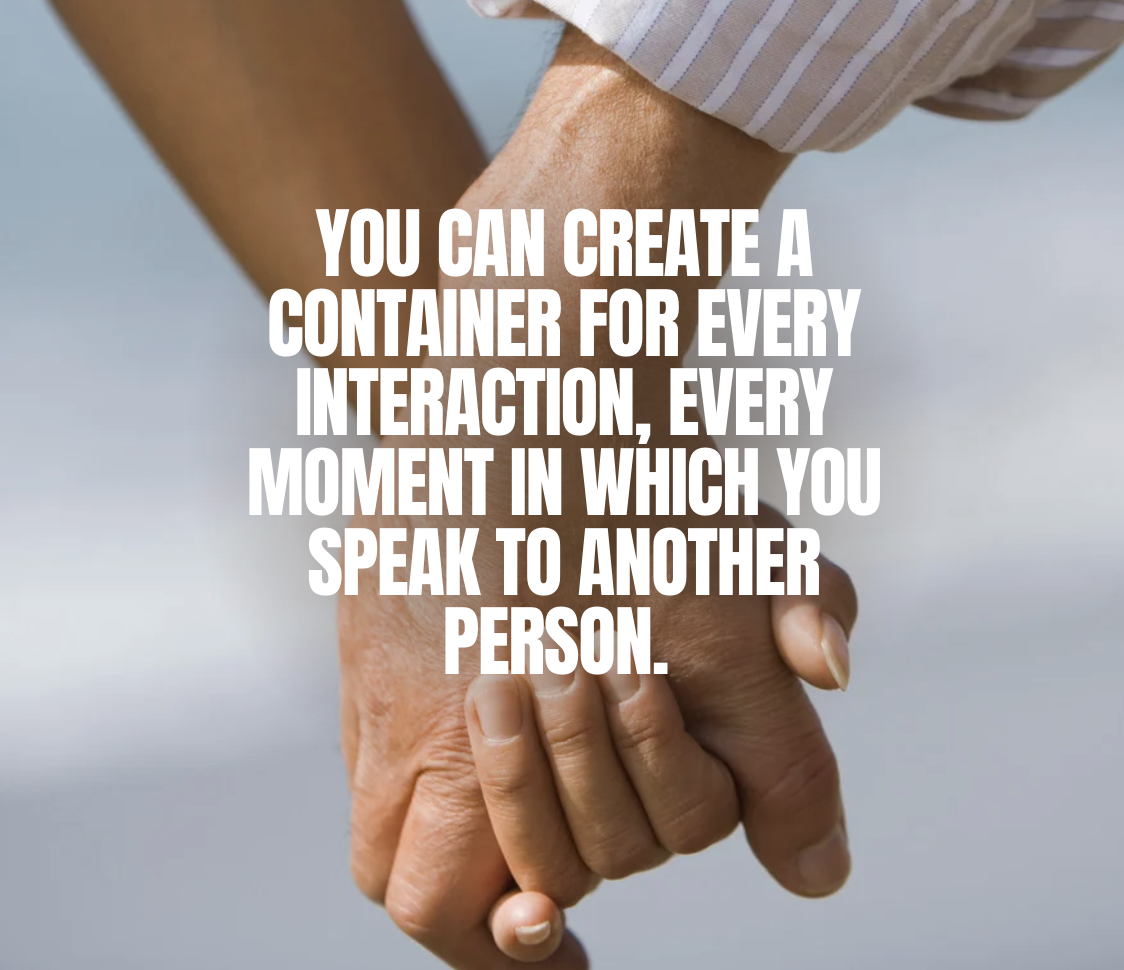
Within the Restorative Storytelling methodology, we begin with the “Coherent Container” tool, where the storyteller is led through a simple protocol for making sure everyone in your system knows what is happening, when it is happening, where it is happening and why. The container is the rules of the story, and every stakeholder’s buy-in is essential if anyone is going to listen.
Then the storyteller enters the interplay between teller and listener with “authentic presence” and “intentional gesture”. These tools ensure all communication is in alignment and not giving mixed messages. They shore up the storyteller, fattening them with a calm confidence and connecting them to the opportunity of the moment.
“Directional vocality” or using the voice to find and build connection with the listener, links the telling with the intention, and then leveraging your unique “storytelling signature” will place the storytelling process in your sphere of competence and excellence.
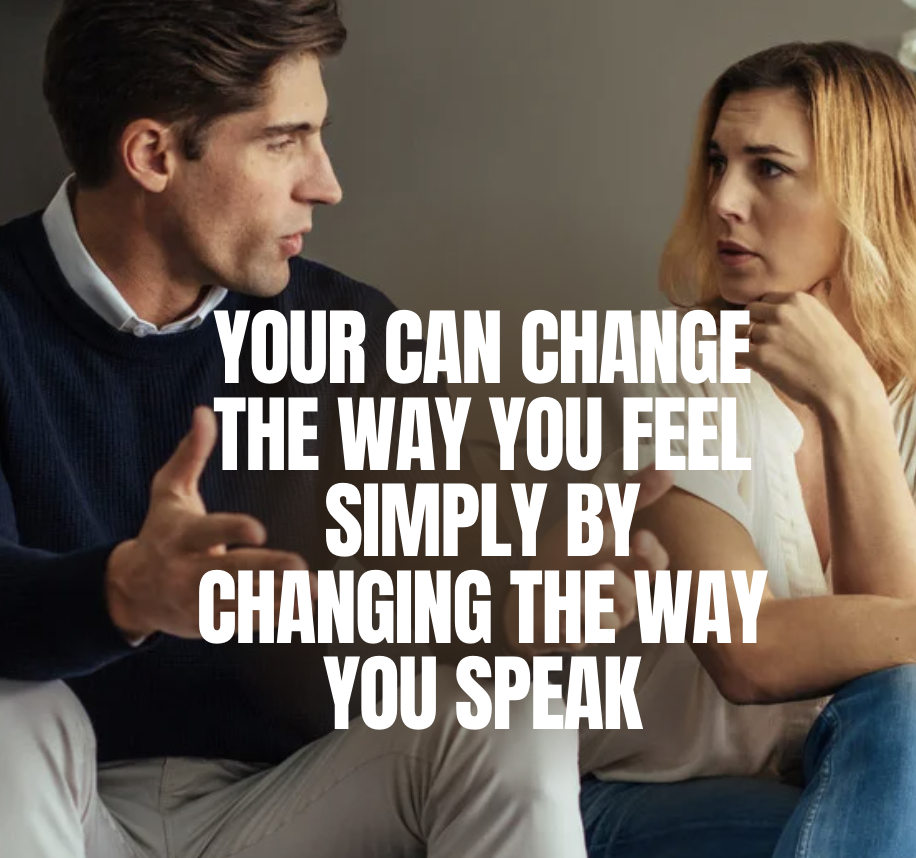
Lastly, the “story-listening” and “open response” tools shift the storytelling experience from one of presentation and entertainment to something explicitly dialogic. The storyteller becomes a stakeholder on the same par as the listener. Everyone present is engaged, paying attention, and responding to the moment. Yes, the storyteller might be in front or on stage, but to use Restorative Storytelling means that the levels disappear and the room is filled with equal exchange. Everyone swims in the same dialogic process until some form of resolution takes place. Depending on the intentions set within the container, a mood might be reached, a problem might be solved, a “next step” might be identified but one thing will always be the case: relationships will be formed and strengthened. Connection will be clear and the community developed that much further.
Join a community of Storytellers and receive lots of free tools and courses. I'd love to meet you!
